

The fawn-like icon, star of classics including Roman Holiday, Breakfast at Tiffany’s, Sabrina, Two for the Road, Charade, Funny Face, and My Fair Lady, continues to fascinate even 33 years after her early death from a rare abdominal cancer.
Her two sons have kept her memory alive. This year, Sean Hepburn Ferrer published Intimate Audrey: An Authorized Biography—a meatier followup to his 1998 sketch Audrey Hepburn, An Elegant Spirit. Ferrer’s memoirs are nuanced and deeply insightful, if sometimes a little too close to hagiography. (But what would you expect from a loving son?) His younger brother Luca Dotti’s offerings, the 2013 coffee table book Audrey in Rome and the 2015 cookbook Audrey at Home, are lighter and brighter, more focused on the shiny surface of his mother’s legacy.
The brothers have feuded in the past over multiple issues related to Hepburn. But they both agree that their transnational, multilingual mother was kind, empathetic, gentle, and principled, with a strain of sadness and a constant need for reassurance. Along the way she charmed friends like Hubert de Givenchy, Capucine, Julie Andrews, Deborah Kerr, Cary Grant, Gregory Peck, Sophia Loren, Yul and Doris Brenner, Billy Wilder, Jimmy Stewart, David Niven and Connie Wald.
At her core, Hepburn was a child of war who identified with Anne Frank—a realist who faced the problems of the world head-on as a UNICEF goodwill ambassador. “In spite of her fragile appearance, she has great vitality,” Cary Grant once said. “She's like steel; she bends but never breaks.”

Little Girl Left
“If I were to write a biography,” Hepburn once told Sean, “it would start like this: I was born in Brussels, Belgium, on May 4, 1929 . . . and I died six weeks later.”
Little Audrey Kathleen Ruston Hepburn loved when her mother, Baroness Ella van Heemstra, recounted the story of the time she turned blue during a whooping cough spasm. “Oh Mummy, and you saved me?” she later asked. “Me and Jesus Christ,” her mother replied. “It was he who told me to pick you up and spank you. That’s when you cried out and took a breath. He gave you another chance at life.”
The formidable, highly critical Baroness came from a charitable aristocratic Dutch family. Already divorced with two older sons by the time she met Joseph Hepburn-Ruston, she was an entirely different character than her Anglo-Irish second husband. The delicate, asthmatic Audrey worshiped her suave, playboy father. He, in turn, doted on her, taking his only child horseback riding and gliding.
But there were darker forces at work in the Hepburn household. According to her son Sean, Audrey carried lifelong shame over the fact that her parents joined the British Union of Fascists. Not only did they befriend the infamous Nazi Unity Mitford, they also met Adolf Hitler. Their marriage quickly fell apart, and little Audrey would cower under her covers eating chocolate for comfort as they fought.
When Audrey was six, her beloved father abandoned the family, an event she called the most traumatic of her life. Adding salt to the wound, he left for Britain to raise money for pro-fascist activities. (He would be jailed during WWII for his fascist allegiance.)
The Baroness was determined that her daughter speak English, so in 1935 she sent Audrey to board in rural Kent. Audrey flourished with her new surrogate family and became a fiend for ballet. But the “girl with the saucer eyes” carried a secret sadness. Her father never once came to visit. “Love does not terrify me, but the going away of it does,” she later said. “I have been made terribly aware of how everything can be wrenched away from you and your life torn apart.”
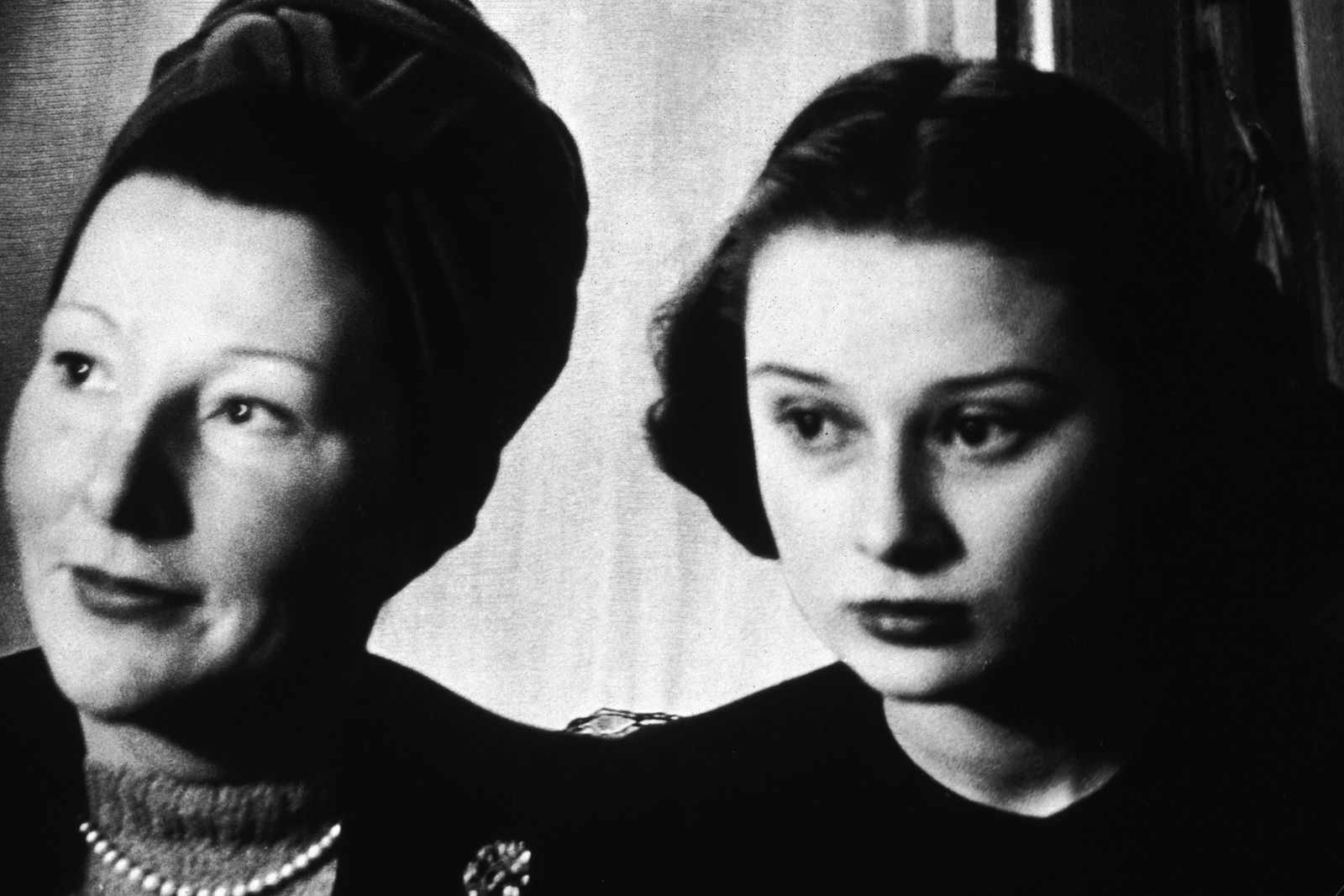
War Child
“I knew the cold clutch of human terror all through my teens,” Hepburn once said. “I saw it, felt it, heard it—and it never goes away. You see, it wasn’t just a nightmare: I was there, and it all happened.”
In 1939, the Baroness misguidedly evacuated her daughter from Kent, believing she would be safer in neutral Holland. But in May 1940, the Nazis invaded Holland, and five years of hell on earth began.
Ferrer believes World War II was the profound experience that most shaped his mother’s life, and the horrors she witnessed make this thesis highly believable. Hepburn and her family survived firebombing, starvation, and daily terror. Her family’s money was confiscated; her favorite uncle, Otto, was murdered by the Nazis; shrapnel lodged in Hepburn’s neck, giving it its beguiling tilt.
One day at a train station, Hepburn saw Jewish families being transported to the concentration camps, an image she could never forget. She aided the underground resistance, delivering messages and pamphlets to those in hiding. While delivering a message to a downed British pilot in the country, a pair of Nazis came upon her and demanded to see her papers. Sweetly, Hepburn picked a bunch of wildflowers and presented them to the soldiers as a bouquet. Charmed, the soldiers left her alone.
Painfully malnourished, Hepburn also danced in Resistance fundraisers known as “black evenings” so secretive that the audience didn’t dare clap—they only smiled in the dark. “That expression—smiling in the dark—came to have such resonance for my mother,” Ferrer writes, “and it became a maxim for us all to live by and an example to follow.”
During the famine of 1944-45, known as the Hongerwinter, things got even worse. The family only had turnips and tulip bulb flour to eat. Hepburn almost died, suffering from jaundice, anemia, rheumatism, and edema. The extended van Heemstra family spent weeks in their villa’s bomb shelter until April 16, 1945, when the Canadians liberated the city of Velp. “That was the day I learned that freedom has a bouquet, a perfume all its own—the smell of English tobacco and petrol," Hepburn later recalled. "Life began again."

The Enchanted
“God kissed her on the cheek and there she was," director Billy Wilder once said of his good friend Hepburn.
While it seemed Hepburn was an overnight sensation, the chic pixie princess had actually paid her dues. After the war, she won a scholarship to the Ballet Rambert in London, only to discover the years of deprivation had stunted her progress and development irreversibly. "I just wanted to vanish then,” she recalled, “because my dream had died."
To make a living, she became a chorus girl. Hepburn loved hanging out with the other dancers, but it was obvious to everyone that the vulnerable waif stood out from the pack. She fell into filmmaking, appearing in small parts before scoring her first lead in the film Secret People. And then lightning struck twice. Almost concurrently in 1951, she was both discovered in Monte Carlo by the author Colette—who knew she would be perfect for the title role of Gigi on Broadway—and chosen by William Wyler to play the conflicted princess at the heart of his romance Roman Holiday.
On location in Rome, she developed a loving and laughter-filled friendship with co-star Gregory Peck, whom she looked to as a mentor. Peck was so impressed with her performance that he insisted she share top billing with him. “If Audrey's name is not up there when the movie comes out, I'm going to look like a damn fool,” he said “She's going to win the Oscar." He was right: Hepburn took home the best actress Oscar in 1954.
Yet even sprinkled in star dust, Hepburn still felt inadequate and insecure. A people pleaser to the core, she was always a favorite motherly presence to everyone on set. According to Dotti, she strove for perfection, believing that “sooner or later they will realize their mistake and will send me home.” To prove her dedication, she made a point of arriving on set before anyone else, her line readings word-perfect and polished.
Humble to a fault, she seemed oblivious to the fact that everyone was mad about her, although Hepburn did enjoy a torrid affair with her married Sabrina co-star William Holden. (He would desperately try to get back together with her during the filming of the 1964 film Paris When it Sizzles.) "You have to be a little bit in love with your leading man and vice versa," she once said coyly. “If you're going to portray love, you have to feel it.”
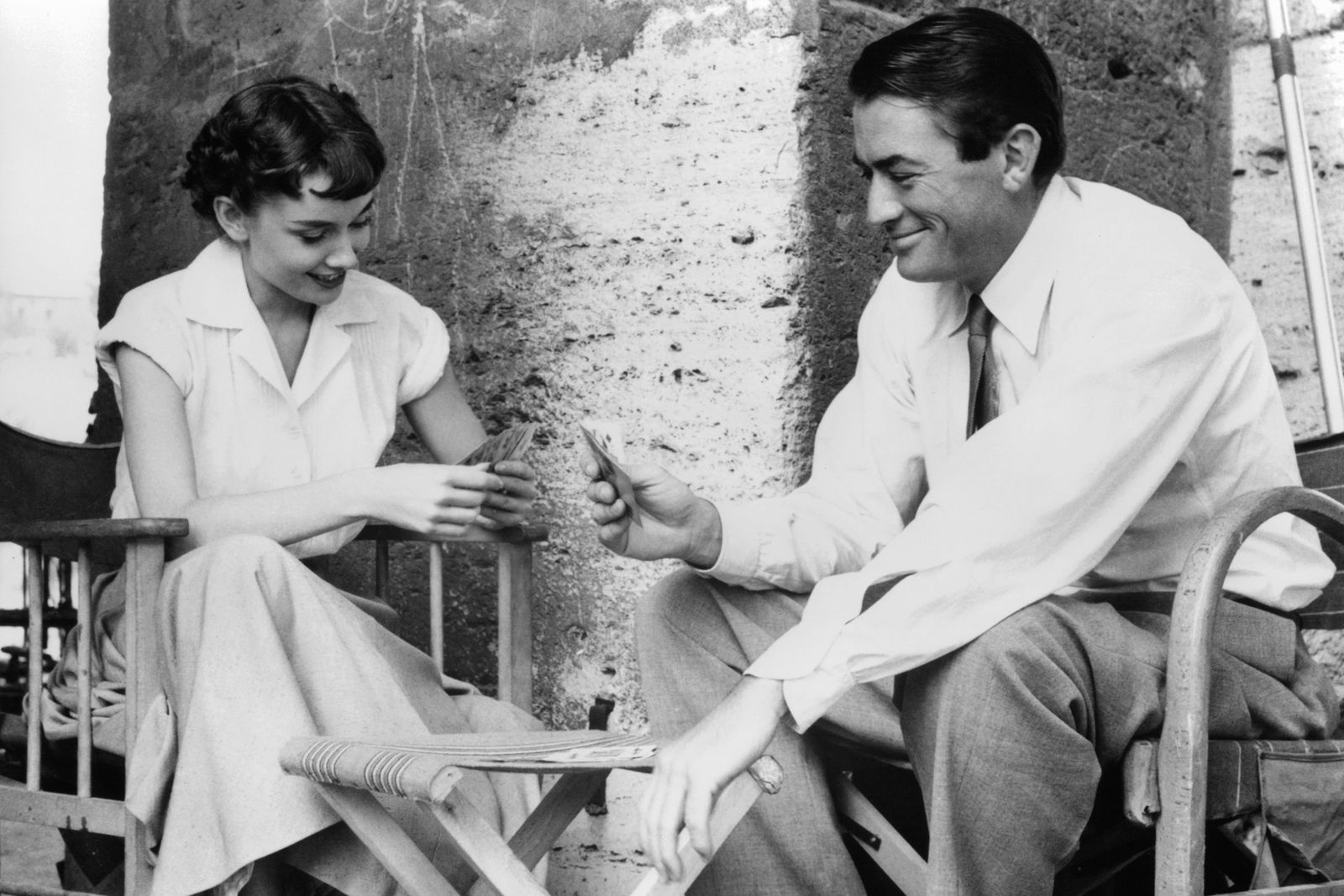
Picture Perfect
It was Gregory Peck who introduced Hepburn to the actor and director Mel Ferrer. Sophisticated, cultured and ambitious, Ferrer was twelve-years older than Hepburn and already the father of four children. Hepburn was enamored with the high-minded Ferrer, though some saw him as a puppet master and opportunist. "That frog-faced delinquent with the spindly legs has caused sufficient havoc to last a long time,” the Baroness wrote, “and I believe that Audrey is getting rather sick of the neurotic side to him!"
But her mother’s intuition was wrong. Hepburn and Ferrer married in 1954 in Switzerland. Ferrer attempted to play Pygmalion to Hepburn, directing and starring with her in the Broadway play Odine, and insisting that she wear her hair long. While Ferrer was obsessed with their careers, Hepburn longed for a baby, despite his ambivalence. She suffered brutal miscarriages (one caused by a fall from a horse during the filming of The Unforgiven) before she finally gave birth to their son, Sean, in 1960. Aware that Ferrer was a reluctant father, she pledged to pay exclusively for Sean’s care.
Motherhood transformed Hepburn’s life. An attentive, fun, loving and very anxious parent, her son remembers that she wanted him to"play his own small part in making the world a better place." She was a perfectionist when it came to being an “ideal” traditional wife. An avid gardner, she transformed her Swiss villa La Paisible into a flower-filled fairytale. “It was charming,” her friend Deborah Kerr recalled. “Wherever they went, everything was white. I always thought that was so indicative of her. She was trying to recapture the peace that had eluded her childhood.”
Sean and his mother became confidants, and over time, self-avowed best friends. “We would lie in bed with the lights out, chatting about what we'd each been up to and how we were feeling,” he writes. “We talked for hours about life, relationships, and friendships and what I'd be like as a grown man. ‘To be a gentleman, you must first be a gentle man,’ she advised.”
But Hepburn’s continued success in movies and motherhood only caused a wedge to grow between her and the increasingly angry and resentful Ferrer. After a rejuvenating affair with buoyant co-star Albert Finney while filming Two For the Road, the Ferrers finally divorced in 1968. “Although he didn't always know how to show it, my father loved my mother to death,” the younger Ferrer writes, “and regretted losing her for the rest of his life.”
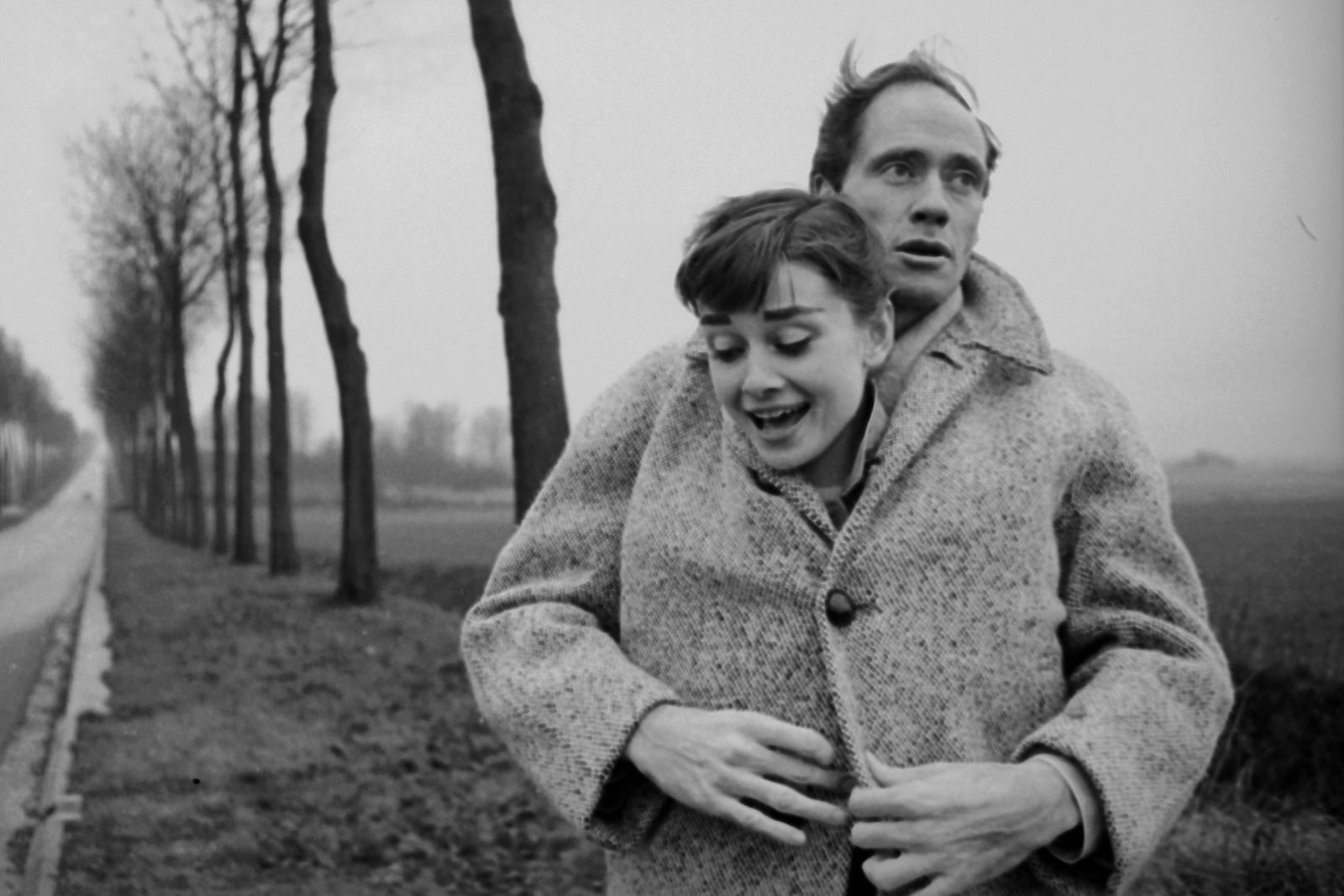
When in Rome
“What had started so promisingly as a whirlwind romance on a yacht bobbing on the Aegean Sea quickly turned into a nightmare from which my mother felt she couldn't escape,” Sean Ferrer writes of his mother's second marriage to the psychiatrist and professor Andrea Dotti.
Nine years younger than Hepburn, Dotti was the fun-loving, rakish son of an aristocratic Italian family. After he swept Hepburn off her feet, she and Sean moved to Rome. She virtually retired from acting and became fully devoted to being a proper upper-class Italian wife and mother.
In 1970, their son Luca was born. To him, Hepburn was just his sweet, hands-on, sometimes cheesy mother who loved to sneakily eat spaghetti with ketchup and snuggle with him while watching tv.
But the older, more protective Sean saw things entirely differently. It soon became clear that Andrea was a heavy drinker and an incorrigible womanizer. He was photographed constantly at night clubs by Rome’s notorious paparazzi, and Hepburn and her children also became the paps’ constant targets.
When Hepburn confronted her husband, he would tell her to get over it, or try and turn his affair back on her. Ashamed and embarrassed, Hepburn became depressed, her penthouse turning into a kind of prison. “One friend who visited ,” Ferrer writes, “was surprised to see her pour herself a small whisky in the middle of the afternoon. ‘It must be six ơ'clock somewhere,’ she said with a wry smile.”
Although she was in despair, Hepburn refused to give up on her marriage. In the spring of 1978, she took an accidental overdose of sleeping pills at La Paisible and had to have her stomach pumped. “I've been hurting too much and needed it to stop,” she told Ferrer, “I'm so dreadfully sorry. I never meant to take my life."
The overdose signaled the end of the marriage. She and Dotti officially divorced in 1982. "You always hope that if you love somebody enough, everything will be all right,” Hepburn later explained. “But it isn't always true."
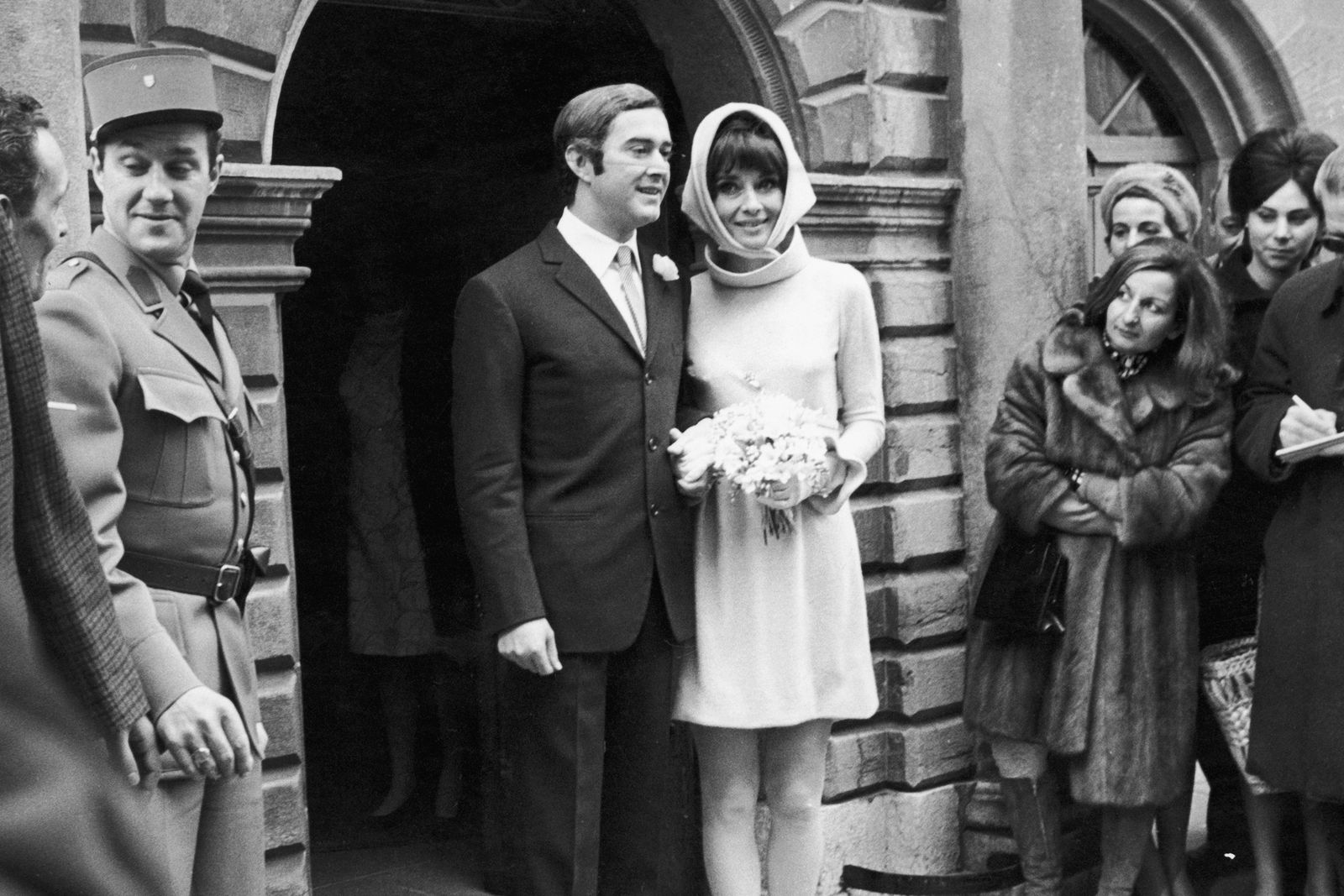
The Haunted
“I have cared for you and Luca all these years,” Audrey told Ferrer in 1988. “Now it is time to care for the world’s children.”
By the late 1980s, Hepburn was finally content. Since 1980, her partner had been the kindly, worshipful Dutch actor Robert Wolders, whom Ferrer likens to a gentlemanly doormat. She had created her own idea of a simple heaven: gardening, growing her own food, hosting friends, taking long strolls and playing with her dogs on the grounds of La Paisible.
But there was more she had to do. In 1988, Hepburn agreed to become a goodwill ambassador for UNICEF. UNRRA, the predecessor for UNICEF, had fed her and countless other Dutch children after liberation. With Wolders by her side, Hepburn traveled everywhere from Ecuador to Ethiopia, Bangladesh, Sudan and Vietnam, shining light on suffering children everywhere. “She was like a magnet,” one associate recalled, “so open and friendly and never caring if she got dirty.”

She became obsessed with her mission. Ferrer came to compare her UNICEF work to a drug she had become addicted to, even though her humanitarian labor brought back memories of her own painful wartime experiences. Hepburn soldiered on, believing her role as ambassador was to “see, feel, return, and tell.” In countless speeches and hearings she reported on the heartbreaking conditions she saw, childing the U.S. House of Representatives:
Governments allocate first to arms and industries and last to children. What are we trying to do? We have already polluted our skies, destroyed our forests, and extinguished thousands of beautiful animals. Are our children next?
But her 1992 mission to worn-torn Somalia, where she witnessed children dying and held them in her arms, would be so traumatic that she would never recover. Ferrer recalls that upon her return, the light disappeared from his mother's eyes, and her soul started to depart. “I am becoming more raw, more hurt, more angry, feeling the pain more deeply," she admitted in a press conference.
Ferrer’s recounting of Hepburn’s last days in Intimate Audrey is a heartbreaking up-close look at a bright spirit slipping away. She died in her sleep on Jan. 20, 1993, considerate to the end. "My life has been much more than a fairy tale," she said shortly before her death. "There have been a lot of dark moments, but there was always light at the end of the tunnel.”
More Great Stories From Vanity Fair
Anok Yai’s American Dream
Could Candice Miller Have Known Her Husband’s Secret?
Taylor Swift’s Wedding, According to Prediction Markets
What Ever Happened to Marvel’s Wunderkind X-Men Showrunner?
Blackpink’s Lisa Pulls Back the Curtain on the Life of a K-Pop Showgirl
Katseye Is Ready to Talk
How Garth Fisher Became the Go-To Plastic Surgeon for the West Coast Elite
Why The World Ignores Genocide in Sudan
How Paul R. Williams Put His Stamp on Los Angeles and Beyond
Exclusive: Trouble Behind the Scenes at Alex Cooper’s Media Empire
From the Archive: The Perks and Perils of Being Donald Trump’s Daughter


