A Red-throated Thrush was reported at Ho Man Tin while I was away in Hungary, being one of the very few species that is both a lifer and a Hong Kong tick, I was so bummed out that I wasn't there when it was reported, as I didn't believe it would stay until I got back. Luckily, this one did stay around and I saw it right where it was reported, on a fruiting fig tree by the football field! It was gorging on the fruits and was seen napping and eating in between constantly. All in all, a great bird to see, and maybe we will get to see it a few more times as it stays here.
 |
| Red-throated Thrush - female |
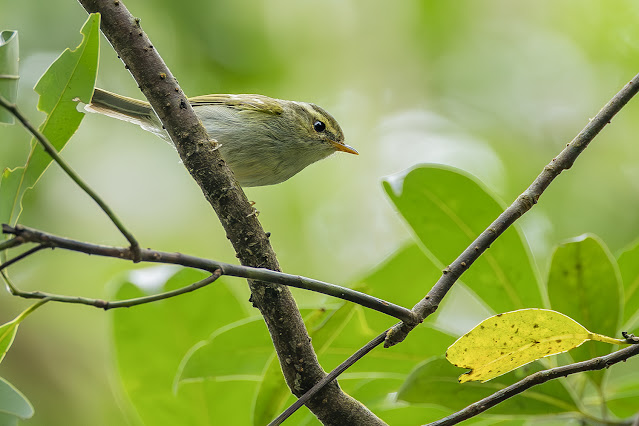
While I have not had much luck connecting with some other rarities such as the Hen Harriers and Brahminy Kites staying near Deep Bay area, I have been able to find two rarities of my own, first an Emei Leaf Warbler at Tai Po Kau which I picked up first by the distinctive ringing call. I couldn't get any photos on my first encounter, as it stayed quite high up, but I managed a few record shots on my second encounter, overall a pale yellow supercilium, two thick pale yellowish wing bars with pale orange lower mandible, not much different to Hartert's Leaf Warbler when seen from below, but the call is very distinctive and definitely key to ID this species in the field.
 |
| Emei Leaf Warbler |
The second rarity I found was a Water Pipit at Ma Tso Lung, it was found foraging around a drained fish pond, it caught my attention as being a rather pale pipit, with rather faint breast and flank markings compare to Siberian Pipits. The bird have been showing well since it's discovery, foraging around the same pond.
 |
| Water Pipit |
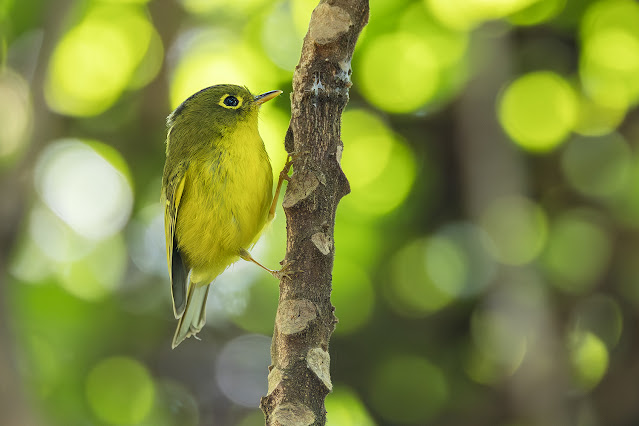
Tai Po Kau has been in form and doing well, with at least two Sulphur-breasted Warblers, and one green crowned morph White-spectacled Warbler around, there were plenty of warblers to scan through, including numerous Hartert's, Pallas's, Yellow-browed and Eastern Crowned. A Hume's Warbler have also been heard calling, but often stay very high up and refuse to show.
 |
| Suphur-breasted Warbler |
 |
| White-spectacled Warbler - green crowned morph |
Rufous-tailed Robins are now back in good numbers, you can hear them throughout, occasionally you get lucky with a few that shows well, a true delight of winter birding.
 |
| Rufous-tailed Robin |
Asian Stubtail are also back in fairly decent numbers, you can hear their trills or 'tack' call easily, although getting a good look at one still requires some patience.
 |
| Asian Stubtail |
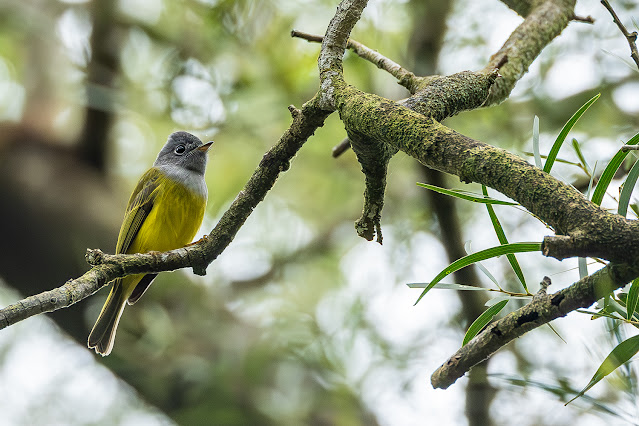
Last winter there were not that many Grey-headed Canary Flycatchers around Tai Po Kau, I am glad there were quite a few here this winter, they always adds a bit of excitement as the bird wave comes through, where they suddenly fly down from a perch to catch an insect close to you.
 |
| Grey-headed Canary Flycatcher |
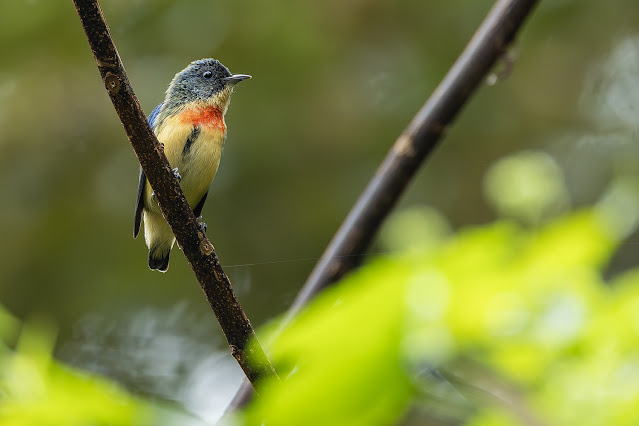
A male Fire-breasted Flowerpecker showed very well to me one day, which is not something I see very often, strangely enough I see females more often, and even when I do see a male they are often very high up.
 |
| Fire-breasted Flowerpecker - male |
Pygmy Cupwings are always a challenge to see well, when we get a friendly one I always feel very happy. I had two very good sightings in the same area lately, quite likely of the same bird! It gave such good views that its hard to believe it is usually a skulking species that is extremely tough to se!
 |
| Pygmy Cupwing |
Otherwise, it is the usual suspects that makes birding in Tai Po Kau so much fun. While they are common, you never know which you are going to get, and which may show better than others. This dynamic birding experience is also what makes birding here exciting and different every time you visit.
 |
| Velvet-fronted Nuthatch |
 |
| Blue-winged Minla |
 |
| Great Barbet |
 |
| Silver-eared Mesia - male |
 |
| White-bellied Erpornis |
 |
| Grey-chinned Minivet - female |
Up to four Ferruginous Ducks were reported around Tam Kon Chau, I don't think I have ever seen so many on one pond before. While a rare visitor generally, they are almost reported annually in Hong Kong.
 |
| Ferruginous Duck - male |
 |
| Ferruginous Duck - female |
Oriental Storks are back, although in small numbers at the moment, at least five or six have been spotted around Mai Po, San Tin and Lok Ma Chau area, but they have not been showing that well, only flying past occasionally. Hopefully they will settle down somewhere so we get good views of them this winter.
 |
| Oriental Stork - with a single Black Kite for size reference |
Many Black-faced Spoonbills have been roosting in front of the tower hide at Mai Po lately, providing excellent views, both Black-faced and Eurasians can be seen there.
 |
| Black-faced and Eurasian Spoonbills |
A Pheasant-tailed Jacana was spotted at Mai Po, it only gave brief fly-by views though. While a former breeding species in Hong Kong, this species is now mostly an autumn migrant, with peak numbers around October, there are fewer records in late November and December.
 |
| Pheasant-tailed Jcana |
Chinese Penduline Tits are now back in good numbers around various reed beds, they are one of my favourite wintering bird and one that I always take pride in showing people. They are just so adorable!
 |
| Chinese Penduline Tit - female |
A surprising find was a male Oriental Greenfinch at Mai Po, not one I see here very often, but one that is always a pleasure to see well.
 |
| Oriental Greenfinch - male |
Other good wintering birds around Mai Po includes a rather confiding Asian Brown Flycatcher, many Olive-backed Pipits and a nice male Daurian Redstart that seems to have taken up residence near the Education Centre.
 |
| Asian Brown Flycatcher |
 |
| Olive-backed Pipit |
 |
| Daurian Redstart - male |
At Ma Tso Lung, other than the Water Pipit, a Brown Shrike continues to show here, likely going to winter here. At least two Common Starlings were spotted amongst the big flock of White-cheeked and Red-billed Starlings, not a common sight at all!
 |
| Brown Shrike |
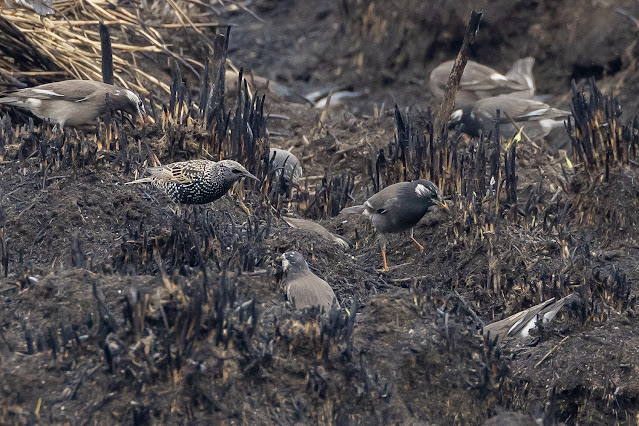 |
| Common Starling & White-cheeked Starlings |
Finally, who can say no to a Common Kingfisher on a nice perch. Having seen quite a few skittish ones in Hungary, the ones in Hong Kong are far friendlier.
 |
| Common Kingfisher |


