
Tag Archives: birding

Muntjac Deer in the UK: An Invasive but Fascinating Species
Muntjac deer (scientific name Muntiacus reevesi) are one of the smallest deer species found in the UK. Despite their modest size, they have become widespread and are considered invasive. Originally from Asia, these deer have carved out a niche in British woodland, urban parks, and even gardens.
Origins and History in the UK
- Muntjac deer are non-native to Britain, originally hailing from China.
- They were first introduced to the UK in the early 20th century. According to the British Deer Society, escapees and deliberate releases from private estates contributed to the establishment of wild populations.
- Over time, muntjac populations have expanded dramatically, particularly in southern and central England.
Physical Characteristics
- Size: They stand roughly 45–52 cm at the shoulder.
- Weight: Males (bucks) typically weigh between 10–18 kg, while females (does) weigh slightly less.
- Appearance: Their fur is reddish-brown in the summer, turning greyer in winter.
- Distinctive features:
- Males have short, unbranched antlers, which grow from pedicels covered in fur.
- They also have long canine teeth (tusk-like) that they may use in fights.
- Their faces often have dark stripes or “V”-shaped markings.
Behaviour, Reproduction & Lifespan
- Breeding: Unlike many deer species, muntjac breed all year round.
- Gestation: Pregnancy lasts about 209–220 days.
- Offspring: Usually a single fawn is born, and the female can come into breeding condition again quickly.
- Social structure: Muntjac are generally solitary or found in pairs (a doe with fawn or a buck and a doe).
- Vocalisation: They are also known as “barking deer” because of their loud, repeated barks; they can also scream or squeak when alarmed.
- Activity: These deer are active day and night, though they are more likely to use open areas during darkness if disturbed.
- Lifespan: In the wild, males live up to around 10 years and females about 13; in captivity, they have been recorded living much longer.
Habitat & Diet
- Preferred habitat: Muntjac thrive in woodlands with dense understorey, scrub, gardens, and even urban green spaces.
- Diet: They browse on shrubs, young trees, brambles, and understorey plants; they also eat fruit
- Ecological impact: Their browsing habits can damage woodland undergrowth, preventing regeneration of coppice
Distribution & Conservation Status
- Range in the UK: Muntjac are widespread in southern and central England and parts of Wales; their distribution is more patchy in the north.
- They are classed as an invasive non-native species.
Conclusion
Muntjac deer are a small but powerful example of how an introduced species can thrive in a new environment. Their adaptability, year-round breeding, and cryptic behavior have allowed them to spread widely across the UK. While their presence presents challenges for native biodiversity, they are also fascinating creatures

Wildlife: Photos, Films, and Conservation
Ecology and Wildlife Awareness
I am an Ecologist, wildlife photographer and film-maker based in the central south of the UK.
This website is dedicated to promoting awareness of nature and the environment. It uses articles, blog posts, wildlife photography, and film making to achieve this.
Feel free to browse my photo gallery, which I plan to update as often as possible. I have many old images to sort through, and I’m continually taking new ones. Hence, I will never fully update it. If you’re a photographer as well, I’m sure you can relate to this that Digitalwildlife.picfair.com
Wildlife Films on YouTube
Youtube.com/@mydigitalwildlife
High-resolution digital files are available through the link above for your media projects. You can use them for nature reserve information boards, educational leaflets, posters, books, magazines, or other publications. I have an extensive collection of British wildlife images, many of which are not featured on the website. Please feel free to browse my social media links. Contact me if you have specific requests or need more details.
My images and wildlife films have been used in books, magazines, calendars, and information boards. They are also featured in conservation and wildlife awareness video projects and websites. These materials are supplied to schools, colleges, and businesses around the world. Get in touch via the website links or connect on social media for more info.
Birding northern France
I spent three days in late April 2023 exploring and birding northern France. I did venture an hour and a half south of Calais to Crécy Forest in search of Black woodpecker as well as some brief explorations of marshland around the Pont-le-Dien and Sailly Bray, Hable d’Ault and the Marquenterre bird reserve.
I didn’t see Black Woodpecker though it always felt like looking for a needle in a haystack, in fact I was surprised how thin on the ground woodpeckers seemed to be with only a little evidence of Green and Great spotted here. Crécy Forest did have easy Hawfinch, Tawny owl and singing Golden oriole as well as Short-toed treecreeper and Tree pipit but nothing to keep me in the area for more than an evening and morning.

Short-toed treecreeper
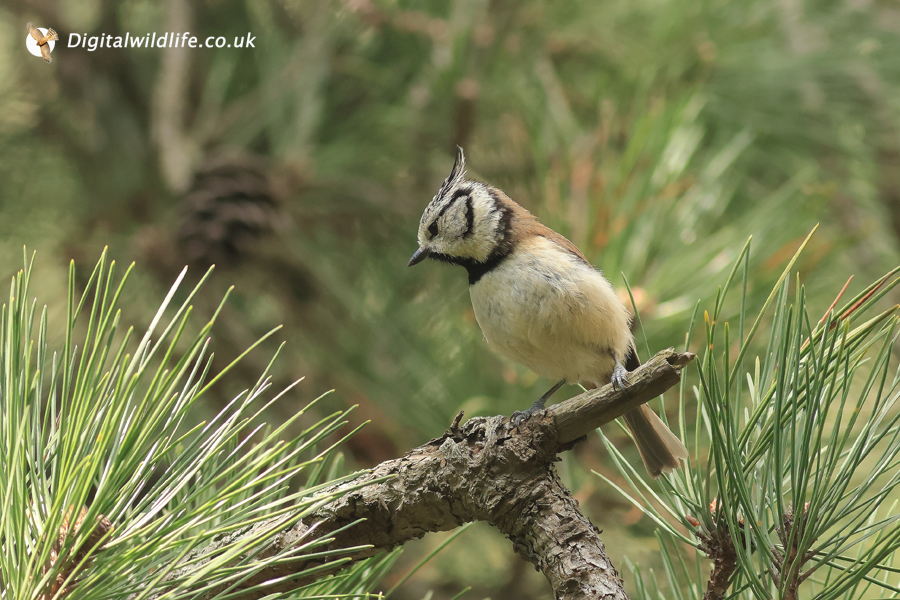
The Marquenterre bird reserve was very crowded and I skipped it, however Crested tit and Short-toed treecreeper were easy in the car park as well as Green hairstreak butterfly.

Crested Tit below and Green hairstreak butterfly above
The track west of Salley bray gives views over marshland towards Le Dien river and produced the only White stork of the trip. Cattle, Little and Great white egret were easily seen here as was Marsh harrier throughout.
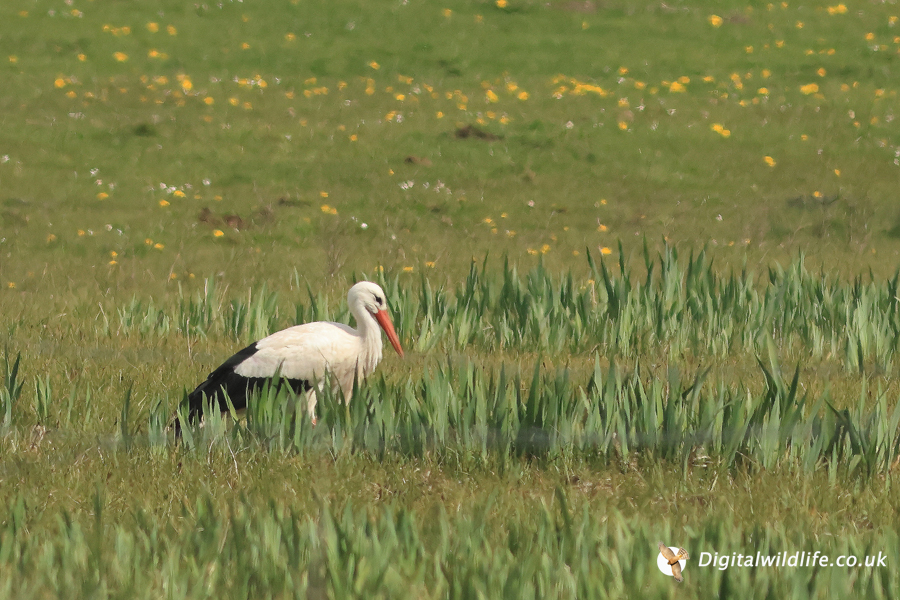
White stork – which was ringed as it turns out in 2019 not all that far away.
The above aside I was surprised to find I spent much of my time in the nature reserve and dunes areas to the east of Calais and west of Dunkirk. The National Nature Reserve Platier Oye and the dunes, lagoons and beaches here were all simple to explore, easy to access and vast, various well positioned hides around the area helped greatly and it really had a feel that you could devote several days to the area and still turn up new birds. The sheer number of birds around gave it a great feel.

Black-winged stilts
Everything I write is from the perspective of a birder of southern England and mostly Hampshire. So, to me birds like Nightingale, Lesser whitethroat, and Yellow wagtail are notable, here these quickly became background birds that are everywhere.

Yellow wagtail
Similarly, the lagoons and scrapes held tens of Ruff and the skies were filled with Hirundines. The trees near the carpark had a singing Short-toed treecreeper. Birds aside I also saw Hare, Natterjack toad and the forever croaking calls of Marsh frog.

Natterjack toad
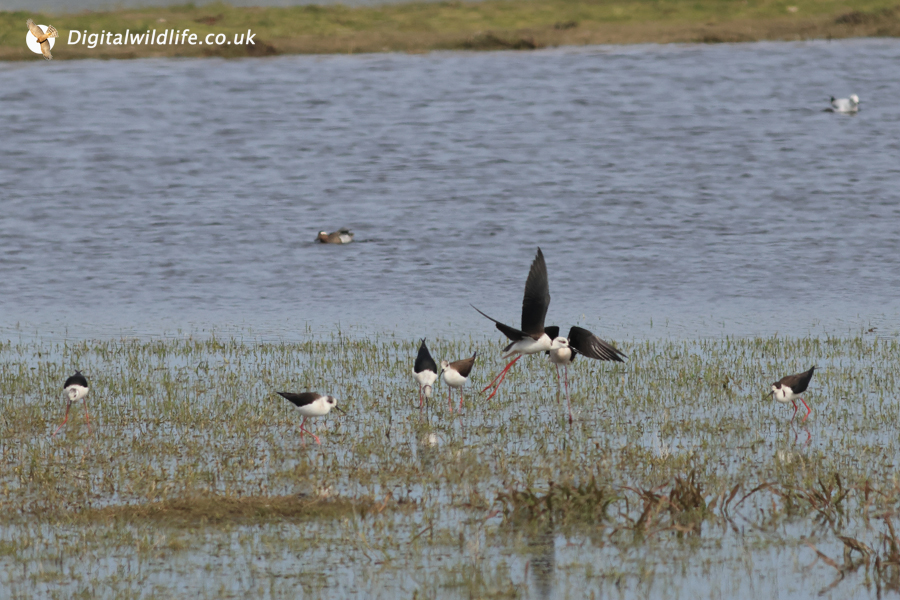
Other birds that may get a British birders pulse racing at least a little, such as Black-winged stilt quickly became background birds also. There were tens of them across the various pools and many were nest building and mating. Avocet were far less common with just a handful seen.

A courting pair of Black-winged stilts
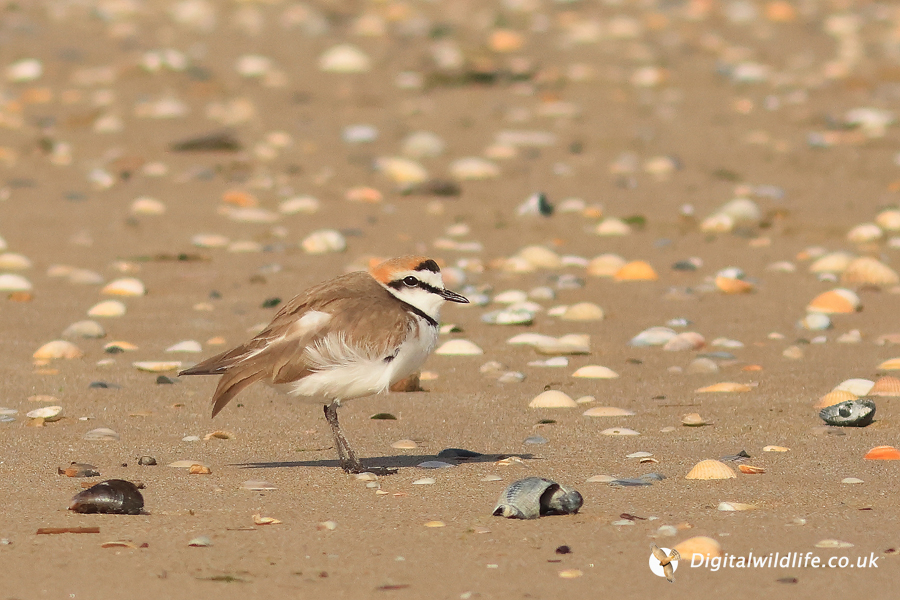
A quick look at the beach in the hope of Kentish plover didn’t disappoint where there were also Wheatear and Ringed plover.

male Kentish plover
The lagoons held at least three Garganey and other waders included Whimbrel, Black tailed godwit, Turnstone, many many Ruff, Dunlin, Redshank, Greenshank, Common sandpiper, Oystercatcher and so on. Mediterranean gulls were frequent and there is a large colony of breeding Sandwich tern. I picked out a Little Gull among the BHGs and another treat from a southern UK birders perspective was at least four summer plumaged Black-necked grebe.
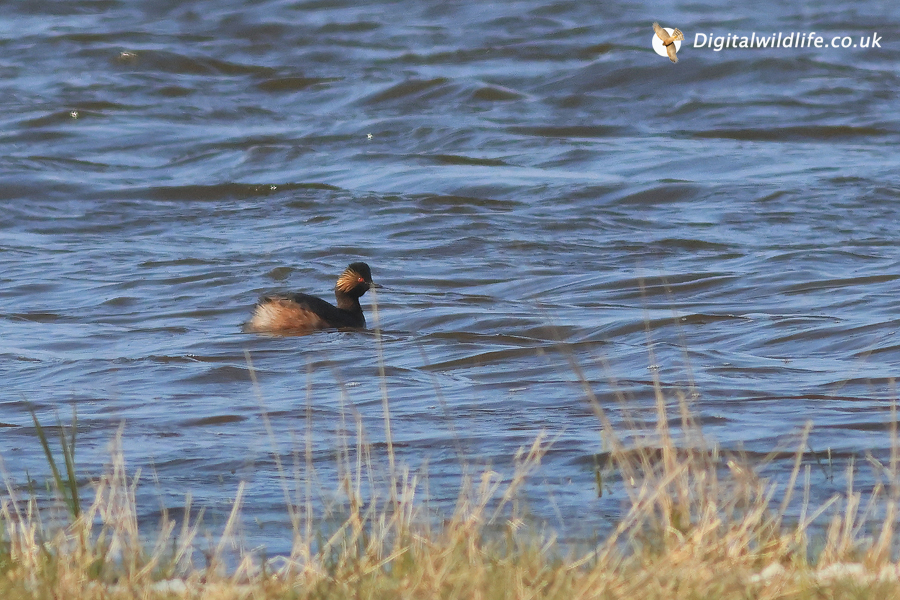
Black necked grebe above and
Black-winged stilts with background male Garganey below
The vast area of dunes and impenetrable scrub must attract far more birds than get seen here but it was alive with singing warblers including Whitethroat and Lesser whitethroat, Willow warbler, Chiffchaff and Blackcap. Add to the list reeling Savi’s warbler a minimum two Wryneck at least two Zitting Cisticola and all this to a backdrop of Nightingale song and it felt a long way from Hampshire, but I was less than three hours away, shuttle crossings all being well.
Gallery below of just some of the species photographed on this three day trip. Please click and scroll through them.


Richard Ford – Digitalwildlife.co.uk

Little owls with big personalities
Little owl (Athene noctua) tend to lay their first eggs in April-May and occasionally have a second brood. They lay 2-4 eggs and incubation is around 4 weeks with fledging taken nearer to 5 weeks after that.
The Little owl is in decline and this may be linked to Farming practices and the number of prey items available. These include earthworms, beetles and other large invertebrates, small mammals and occasionally birds.

My observation of a Little owl pair over the years have been sparse and inconsistent but still interesting enough to add here as much of the behaviour of the juveniles is in contrast to the Tawny Owls (Strix aluco). Please see previous article here
Viewing conditions are a little difficult as this pair of Owl’s nest on private land. The birds would doubtless not use the old apple tree and nest box here to nest and to roost were the area accessible to the public.

Little owls are crepuscular meaning they are active predominantly at dawn and dusk, unlike the more strictly nocturnal Tawny owl. They are also far more likely to be encountered during the daylight, they can sometimes be found sunning themselves on a winters afternoon if the weather is right as well as sitting in the open near the nest site at breeding time.

My observations suggest this pair raise only one or two chicks each year. This last year (2022) certainly they reared two chicks to the fledging stage and unlike my observations with Tawny Owl, Little owl chick seems to stay near the natal site and return to the nest hole if they feel threatened.

Once they are able to make short flights, they still remain active near to the original nest until they become bold enough to disperse more widely to their own new territory in the autumn.
Richard Ford
http://www.Digitalwildlife.co.uk
References
BTO Birdfacts website
Click on the gallery below for higher resolution Little owl pics


Prowling for Barn owls
Some days as a wildlife photographer you can spend hours in the field and things just don’t fall into place. Poor light, poor weather, animals and birds just not doing what you’d hoped. It’s all about putting the hours in and you just won’t get result sitting at home on the sofa. There is always a little luck involved but great wildlife photograph’s also take planning, they generally don’t just happen.
It can sometimes take years of field work and patience in order to place yourself in the right place at the right time. And even then, the weather or light or behaviours of your subject all have to fall into place for the stars to align. I suppose if there was no challenge it would soon become boring!
For over twenty years I’ve been monitoring some local Barn owls Tyto alba. I see them sporadically, far less often than I look for them, despite having reasonable knowledge of their habits. Often if I see them hunting at all, it’s briefly at a distance or in poor light after the sun has set, or in the morning I may be able to watch them have a last attempt to hunt briefly before watching them head to roost before the sun rises.

Barn Owl Tyto alba hunting on the wing in early morning light
Getting good shots of Barn owl hunting needs the birds close enough for detail, in light that enables a high enough shutter speed to freeze movement. Barn owls, since they hunt on the wing, will struggle to hunt in the rain, their plumage isn’t all that water proof not to mention that rain messes with them hunting using sound, so a series of wet nights may mean they struggle to catch enough food and that can sometimes mean they will hunt in the daylight when it’s dry. In the breeding season the nights are short so if they have chicks to feed Barn owls may also hunt in daylight if needs must. I knew all this but it’s never really helped me nail any flight shots in daylight.


Barn owl hunting in early morning light
This particular dawn in early February was a beautiful one, after a clear night with a full moon. Ideal hunting conditions and most Barn owls would no doubt have been hunting successfully and resting up between feeds most of the night to then go to roost at dawn.
Barn Owl rising out of the frosted grass just after swallowing a vole
So, I have no explanation for why I was able to watch and photograph this Barn owl hunting from just before dawn to nearly two hours afterwards, by which time it was at times in full sunlight. It wasn’t always close, but twice it came within just a few meters of me checking out what I was as I crouched motionless against the hedgerow. I watched it catch a Vole not twenty meters from me, tease it from the grass and swallow it whole with a few gulps and jerks of the head. It knew I was there.
My photos aren’t perfect, though I am pleased with them, but the whole experience was mesmerising and unforgettable. Just me and a Barn owl sharing a beautiful sunrise and a frosty winters morning with three or four Roe deer Capreolus capreolus .

A pair of Roe deer Capreolus capreolus in winter
It was far less tranquil for a handful of unfortunate Voles however….
Richard Ford – Digitalwildlife.co.uk

Kingfisher mission.
Six hours in a hide at a private site in Hampshire, resulted in about ten seconds with this young Kingfisher within range of my lens, and only one or two pictures that work. I’m very pleased with this picture so I’m not complaining, though it would have been nice to have taken a wider selection of images.

You can’t win them all and that’s wildlife photography for you! Patience will often pay off but there are rarely guarantees. It’s been a long time since I photographed Kingfisher and it’s almost always been from a hide. So having a good deal of background knowledge and fieldwork behind you will be the key.
My host had done just that and placed his hide in just the right place, from what he told me, after much trial and error.
You know who you are, thanks very much for the opportunity, I hope to do it again some time. Mission not quite accomplished, but a great start.
Rich Ford


My Old Flickr Photostream
https://www.flickr.com/photos/snapcapture1/
If anyone wants to have a look. It’s been a while since I posted, as my new gallery of images will be here as time progresses.
https://digitalwildlife.picfair.com/all_images
Rich

Malta as a Birding Destination
Nature Haven or Naturalist’s Nightmare
A few days on a non-birding holiday in the Maltese islands with my wife did hold a few interesting birds from a British birders perspective. Early March is the start of the migration season and soon passage birds like Marsh harrier become of interest to hunters sadly.
Knowing well that this was the case I didn’t expect to see much and I only spent a few hours over the week actually looking. However I was pleasantly surprised. Whilst the islands do seem at first glance devoid of birdlife (in the uk you can’t really travel any distance without seeing birds of some sort in the sky or in the trees) on closer inspection there is more than the first impression of simply sparrows and feral pigeons. For a start the majority of the sparrows are Spanish sparrows.

Birdlife Malta are clearly doing some excellent work here in the face of what must feel like a demoralising uphill struggle against the want of the hunting fraternity on the islands. I would encourage anyone reading this to support their work however you can. If you plan to visit the islands do visit the reserves that they manage and you will find them to be little oasis in the bustling busyness of industry that seems to have consumed much of the islands. https://birdlifemalta.org/nature-reserves/
The first reserve I visited (Għadira Nature Reserve https://birdlifemalta.org/nature-reserves/ghadira/ ) has some shallow freshwater and islands that immediately looked interesting. In a few months I’m told breeding Black-winged stilt here is likely. The open water swarmed with House martin and Barn swallow as I arrived. It was early March so few of these birds have yet to reach the uk, but clearly spring starts earlier here
I had come to Malta having done no real prior research regarding the birds I was likely to see. As I said this wasn’t a birding holiday and perhaps naively, I’d assumed there was little to see anyway, given what I knew about the hunting. Of course, my bins and camera had come along just in case 🙂 It was also nice in many ways to discover what was here rather than see what I expected. Beyond the pigeons and sparrows, I found the next most common species all over the islands to be White wagtail, Black redstart, Zitting cisticola and Sardinian warbler. There were also Cetti’s warbler, Blackcap and Chiffchaff around and about.

I settled in one of the basic hides having had a brief chat with the knowledgeable and friendly staff at the visitor’s centre and scanned the promising looking habitat with bins. A Shelduck was present along with a feral Muscovy duck. The water’s edge looked good for waders but I had no idea what to expect here in Malta or at this time of year. I quickly picked up a Little ringed plover along with two Common sandpiper and a Ruff, followed by a Little stint. From a British perspective a haul of pretty good birds for a short wander while my wife had a snooze in the car.

We enjoyed various walks in some barren but interesting habitat over the next few days and I picked up further birds of interest such as Quail, which were heard regularly. Nightingale, Stonechat and, the apparently resident and fairly common in the right habitat here, but from a British perspective highly notable, Blue rock thrush, which we came across easily on Gozo.

At the Salina Nature Reserve ( https://birdlifemalta.org/nature-reserves/is-salina/ ) the salt pans give food and refuge to many gulls and water birds through the seasons. The pans held many gulls, Black headed gulls, Mediterranean gulls and Yellow legged gulls mostly, as well as a few Sandwich terns and this decent looking area no doubt turns up good waders, gulls and waterfowl through the migration season and is a good spot to sky watch for raptors too. I suspect that in just a few weeks when spring migration really kicks off Malta would have a lot to offer a visiting birder, sadly the sound of gunfire will no doubt be a feature also.
At the Salina reserve I had a very informative chat with one of the Birdlife Malta staff who was only too happy to share his knowledge and explain the situation, It made me wish I could do more to help their work on these islands.
One thing I hadn’t realise is that the hunting here is driven by taxidermy. The prize of a pristine stuffed Black stork or similar can fetch in the region of 2000 euros apparently, and underground collectors will pay such sums on the black market. Despite some laws that protect some species from hunting it seems unlikely that many of the unscrupulous bloodthirsty hunters on the island care about either the out of season restrictions or the legislation protecting specific species.

My new friend confirmed that a shoot first check later attitude is likely and that many of the eyes behind the guns don’t know the difference when it comes to female Aythya ducks for example and it’s unlikely they would care if they did. Sadly there is a trophy hunting mentally here, in that the rarer species, the protected species are therefore the more desirable from a black market taxidermy perspective and so ‘worth the risk’ if that is your mentality. It’s unclear how much enforcement there is when it comes to the laws around hunting here and what the punishments would be if caught or prosecuted. Recent government attitudes I’ve picked up on, would imply that Maltese politicians looking for votes are not unwilling to be swayed to the detriment of protected species. I suspect much like the game keepers who are willing to poison and trap birds of prey in the United Kingdom it is also considered ‘worth the risk’ because frankly that risk is small and equivalent to a slap on the wrist even if caught and prosecuted.
Links to a couple of Bird Life Malta posts showing the kind of heart wrenching situations they have to deal with every year here.
https://www.instagram.com/p/CWYAHc5qnQ-/
https://www.instagram.com/p/CWDisbMqjtw/

If you go to Malta and enjoy seeing the birds, publicise it and talk about it to like-minded people and perhaps Malta can have an ecotourism industry that will change things. Support the work of Birdlife Malta and report any dead or injured birds that you see.
https://birdlifemalta.org/
There is plenty of helpful information on their website and much, much more to see from a wildlife perspective than I was able to manage in early spring on a non birding holiday. But I would go back for more and I hope in some small way this post will help.

Richard Ford
Digitalwildlife.co.uk
Malta – March 2022

Crest population on Fire
Two pairs were already established, singing and showing well in the Bordon Inclosure on 16th of February this year (2022). I’m starting to wonder if they ever actually leave the area. Clearly Firecrest do move around and some migrate here but based on my experience it’s clear that many don’t winter especially far from where they breed.

I saw or heard nine singing Firecrest in the Deadwater Valley Trust Bordon Inclosure during a survey of a small area there first thing this morning. Most birds were associated with Ivy covered trees or Holly. They are tiny, the smallest british bird along with the Goldcrest and were formally a scarce bird in the UK. They first bred in the New Forest in 1962 and have steadily increased in numbers over the following decades. The Bordon area clearly suites them well and their song can be heard in suitable areas from late February to early March.

 Richard Ford - Digitalwildlife.co.uk