
The Suffolk Wildlife Trust reserve at Blaxhall Common with the heather (Calluna vulgaris) in full bloom.
Suffolk’s Sandling Heaths are an old favourite. As is so often the case, this was once a much more extensive habitat, stretching the best part of the way along the coast of Suffolk. It has long succumbed to the fragmenting influences of development, agriculture and commercial forestry. What remains, neverthless, covers – in the modern context at least – a not inconsiderable area, just shy of two and half thousand hectares. It is indeed a fascinating place for the naturalist, where scarce birds, like nightjar (Caprimulgus europeus), woodlark (Lululla arborea) and Dartford warbler (Sylvia undata) breed on the heaths, alongside such iconic heathland insects as the silver-studded blue (Plebejus argus – a rather rare butterfly in the UK), green tiger beetle (Cicindela campestris) and heath bumblebee (Bombus jonellus). Even the forest plantations, where space is allowed among the conifer ranks, add their own, natural dimension.
A few observations of the insect life met with during our visit this summer…

Whilst parking our campervan at Blaxhall we disturbed this fine looking oak bush-cricket (Meconema thalassinum) from its leafy concealment, a female as can be seen by the curved ovipositor on the abdomen tip, used for despositing eggs into tree bark, or among mosses and lichen. Rather than stridulate (‘sing’) as many other crickets do, by rubbing their wings together, a male oak bush-cricket attracts attention by drumming a hind leg against a leaf.

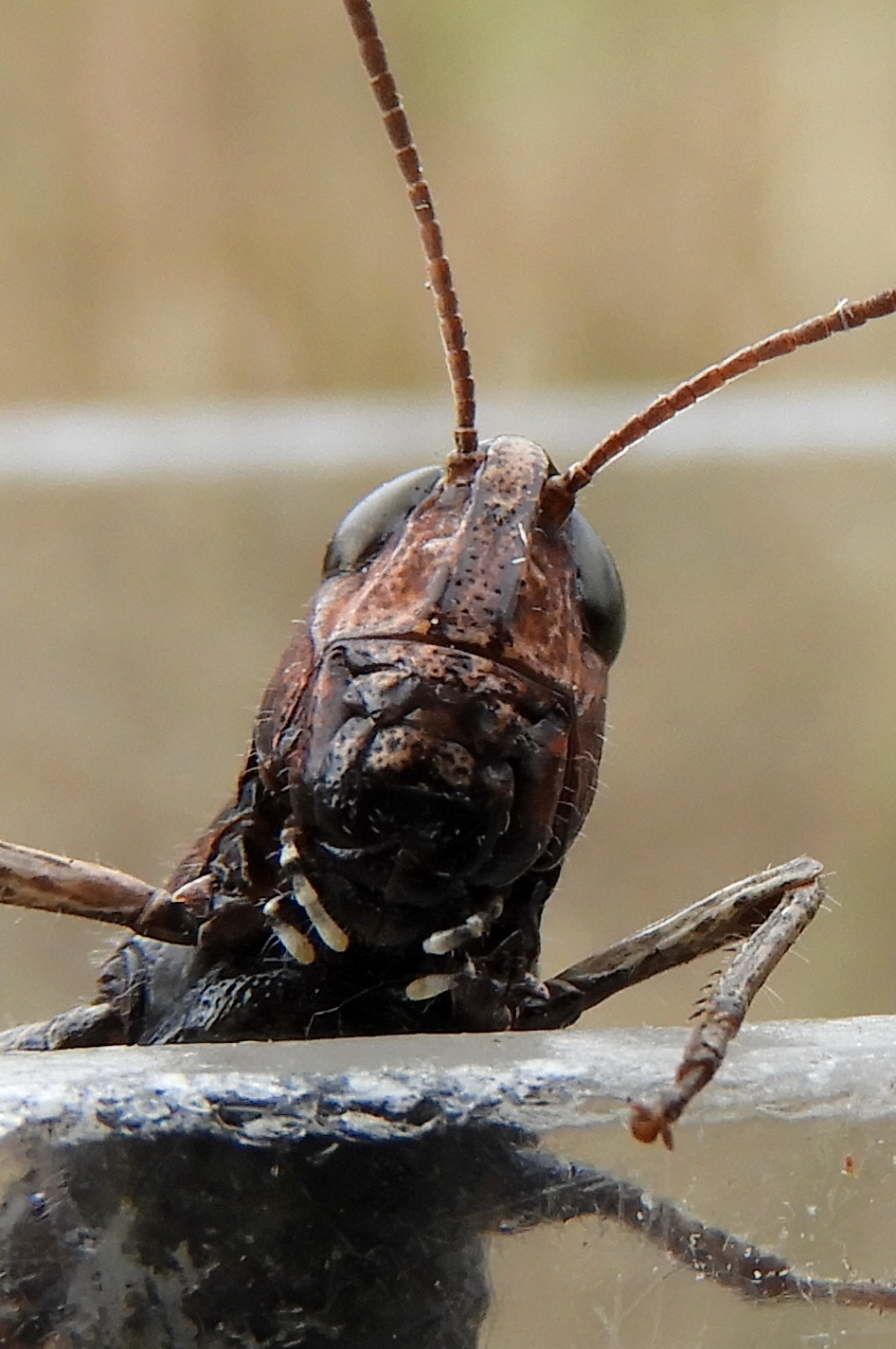
I just about managed to catch this shot of a woodland grasshopper (Omocestus rufipes) on Sutton Heath. This is an uncommon species, found largely in the southern counties of England where they may inhabitat woodland rides and clearings and heathland areas in the vicinity of woodland. While they can be tricky to separate from other grasshoppers, a decent view of the ‘face’ shows the distinctive white palps, as can be clearly seen in this Dorset specimen I encountered a few years back...
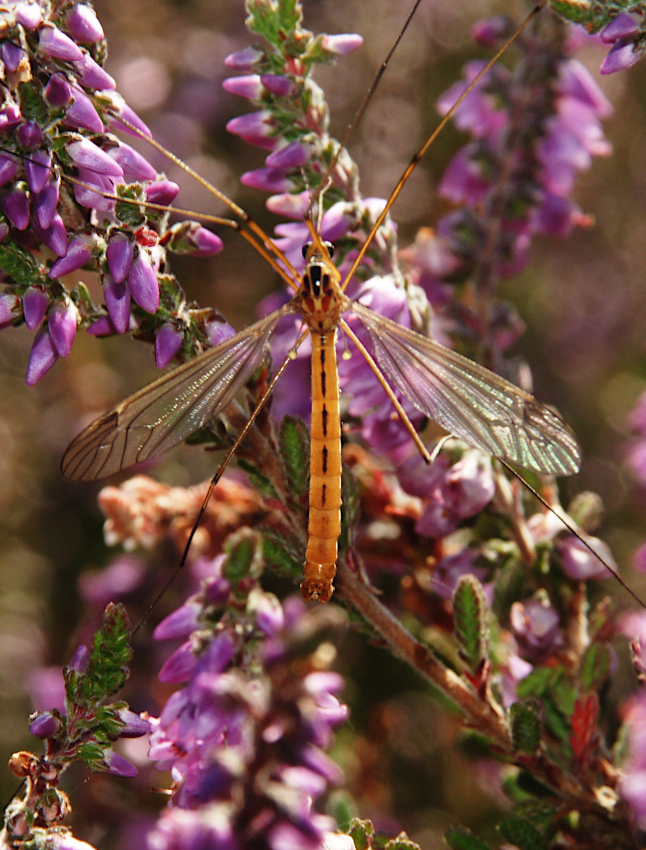
Nephrotoma scurra is one of the so-called tiger craneflies, a reference to the markings on the thorax. The Nephrotoma genus includes some common insects, such as N. quadrifaria and N. appendiculata (the spotted cranefly). This species is scarcer, with a distinct preference for heathland habitats.

The red longhorn beetle (Stictoleptura rubra) is another uncommon species, whose larvae develop in dead wood, often preferring to inhabit conifer woods. This one was inhabiting the heathy fringes of Rendlesham Forest and had the good manners to alight on my leg for a convenient, if unusual photo opportunity.
 essex naturalist
Leave a comment