Only a few species of Odonata are on the wing this far into the British autumn. The common darter (Sympetrum striolatum), one other Uk’s most numerous and widespread dragonflies, is one them. They might in fact – weather permitting – be around for a few more weeks yet. I have seen them as late as early November before now, on one occasion even as a tandem pair, the female flicking the tip of her abdomen into the water as they hovered, depositing her eggs as she did so. In the South West of the UK, where the frosts might be later to grip, this species has on rare occasion been seen as late as December; in the Mediterranean parts of their expansive European range they may be active throughout the year.
The insect photographed (an over-mature female) was one of a number I encountered, making the most of the late-afternoon October sunshine; warm enough for them to be at large, but cool enough for them to bask obligingly for an inquiring lens.
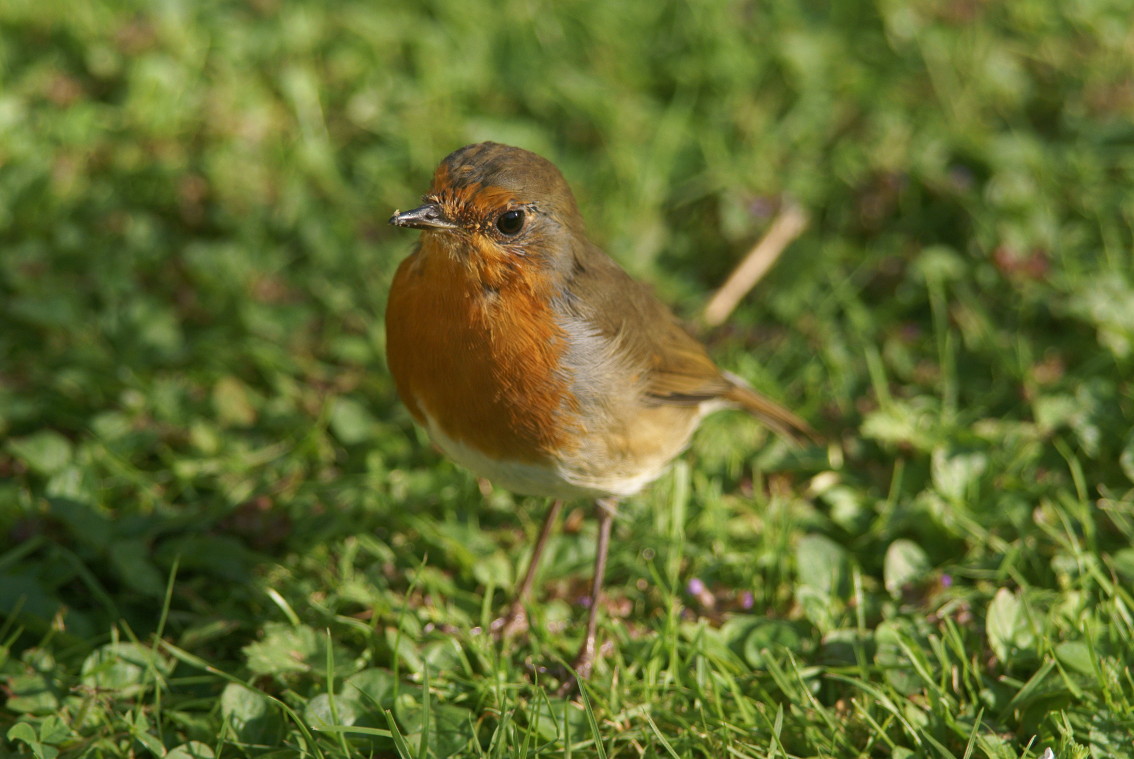
I cycle to work and some mornings, if I am out of the door early enough, I walk part of the journey through one of my local woods. It is a wood in a chiefly urban environment and busy road passes one side of the wood. If you were to approach it during the morning rush hour, you would hear the previously distant sound of the traffic thickening towards a throbbing drone with each step closer to the woodland edge, rising so as to begin to overtop the sounds of waking wood. Today though, I was reminded of the resilience of wild things. Two wren, probably only a few dozen metres apart, whirred their claims to each other, of their place in the wood, with that inimitable outpouring of frantic song. And a robin too, with his altogether more patient delivery of hurried cadence. Each, with their different qualities, penetrated the low, all encompassing din of the traffic, casting lines of clarity through the muddle of noise. They spoke to me of voices of reason.
It reminded me also of an excerpt from my book ‘Never a Dull Moment‘ (if you will allow me the indulgence of briefly quoting my own words), a paragraph from a short chapter entitled ‘Simple Nature’, where I recalled the music of a song thrush soaring above the din city centre traffic while waiting for a bus: “…… Simple nature is the tiny chlorophyll fountain of a fern issuing from the mortar of a city harbour wall. Ragwort blooming brightly among the uncompromising substrate of railway track ballast. The different sounds that the wind makes in different trees. It is watching forest deer without them knowing you are there. Noticing the gulls streaming steadily to roost across a reddening autumn sky above a busy street and wondering where their wings have taken them. It is the bird’s song above the roar of traffic and the stillness of the wee small hours……“
A view of the Picos de Europa – the ‘Peaks of Europe’.
Our travels this summer, while predominantly and typically spent in the UK, took us to Northern Spain to visit family. It was within the Picos de Europa National Park that we spent our stay, an area of around 650km2 of mountain and forest country, rising at its highest to over 2600m and remote enough to still harbour such embodiments of the wild as the wolf and brown bear. It is a fabulous place.
While our stay could not provide us with any realistic opportunity of even an off chance of finding such elusive and enigmatic denizens as those just mentioned, it did nevertheless allow us a glimpse of the natural riches of this wild and wonderful location.
Standing over a metre tall and with a wingspan of as much as 2.6 metres, the griffon vulture (Gyps fulvus) is a big bird. I had never seen before, but was thrilled to encounter on several occasions during our trip. Against a clear sky, or the huge landscapes of the Picos, it was often difficult to grasp their size, but on one occasion a raven (a bird of not inconsiderable dimensions) came into view, appearing as a jackdaw might beside a buzzard. They are loosely colonial, cliff-edge or cave nesters in precipitous mountain country and I was more than once mesmerised at the sight of half a dozen or more birds floating over our accomodation on the warming morning air.
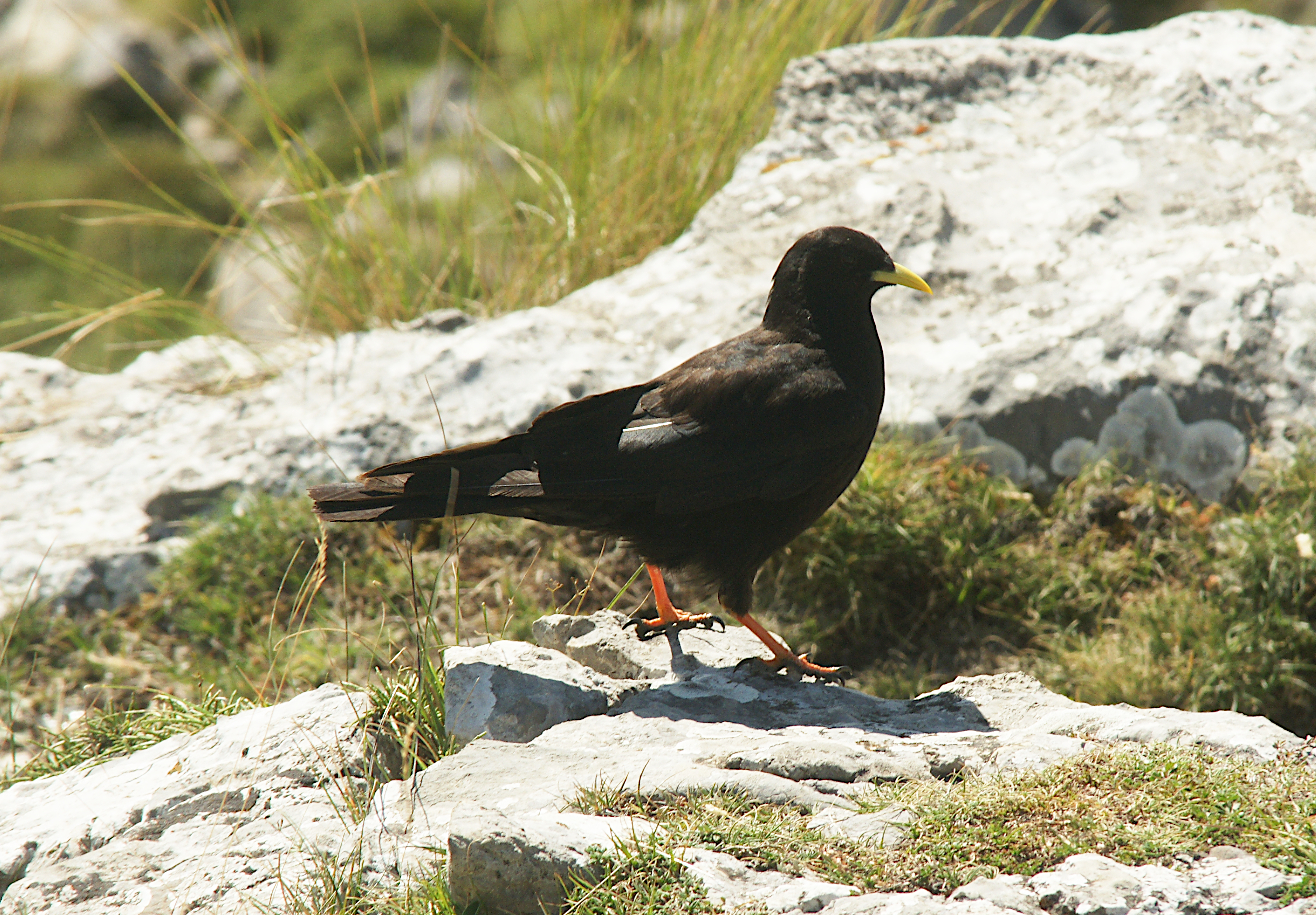
Touching on the subject of crows, the alpine (or yellow-billed) chough (Pyrrhocorax graculus) is a bird similarly devoted to the lofty mountain realms, but offering a rather different experience than those loafing vultures. These small crows are firmly gregarious and highly active birds. Often fearless, yet perpetually restless, they will offer close views as they swoop past the watcher in little flocks, emitting all the while their curious, buzzing calls as the do so.
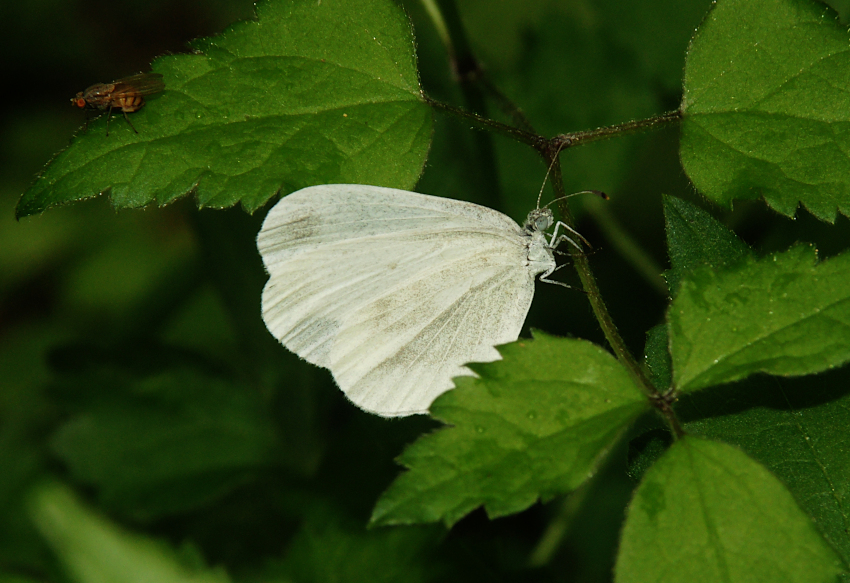
In the UK the wood white (Leptidia sinapis) is among the rarest of butterflies, a species which I had only ever seen once before. It was quite the novelty then, to find them almost commonplace our Spanish travels. They are characterised by a slow, rather deliberate flight, yet they can all the same be maddeningly active, especially a male searching for a mate. A frustration though, only for the photography; their presence was a delight.
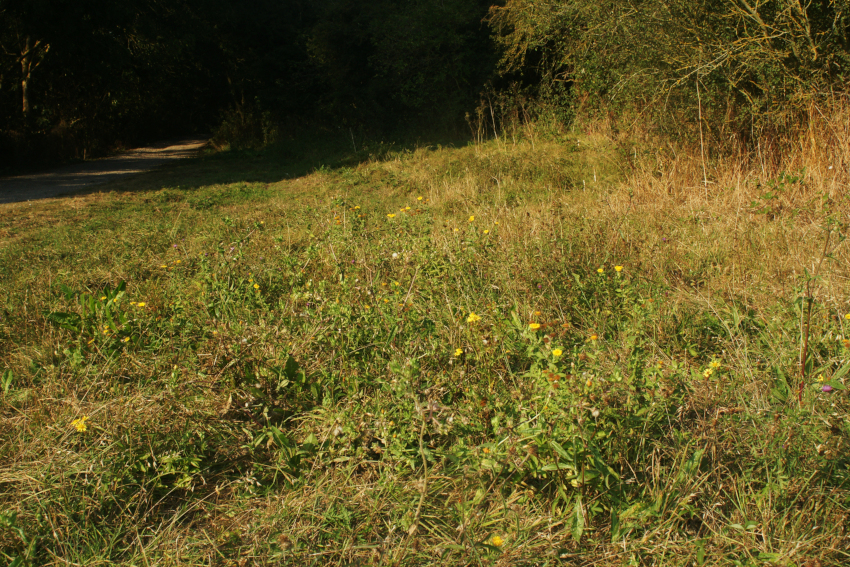
Tucked away off the Essex shore of the Thames Estuary and a breath away from the urban sprawl just to the north are the Hadleigh and Benfleet Downs. This is the place, along with the fringing creeks and marhses, that I have spent more time walking in than any other, yet they have not often featured on these pages. On this occasion they will, although for the purpose of the idea to be conveyed, location is irrelevant.
I hesitated to place the above image at the head of this post. It is not exactly remarkable in obvious any way, but this is rather the point. It was this little, what I suppose one could call weedy corner at the junction of two surfaced paths, with its scattering late-season knapweed, fleabane, ox-tongue and ragwort flowers, in which I found myself immersed. The early autumn warmth had drawn in a perhaps unlikely selection of butterflies, given the lateness of the season and the isolated situation of this little tangle of plants. Five species in fact, including small heath (Coenonympha pamphilus), brown argus (Aricia agestis) and the following species caught by the lens.
It is always a pleasure to meet the wall brown (Lasiommata megera) here. This species had declined locally decades ago, but the Downs remained a toe-hold for them. My feeling is that they have perhaps increased here and at other adjacent sites, something not often said in these times of butterfly decline. The name, often given simply as ‘Wall’, refers to a strong predilection for basking on the bare surfaces of walls, rocks and bare-patches of paths.
The meadow brown (Maniola jurtina) is another, more common member of the ‘brown’ clan. They fly throughout summer, well into September and can be an abundant grassland species. This one resolutely refused to reveal the startling eyespot on the underside of the forewings, content to sup from its fleabane bloom in relative obscurity.
While sharing little of the eponymous hues of the males, the female common blue (Polyommatus icarus) does nevertheless sport the plethora black-centred spots and red-flashes typical of this and other closely related species. This is another butterfly with a lengthy flight season, extending perhaps into the early days of October.
The Suffolk Wildlife Trust reserve at Blaxhall Common with the heather (Calluna vulgaris) in full bloom.
Suffolk’s Sandling Heaths are an old favourite. As is so often the case, this was once a much more extensive habitat, stretching the best part of the way along the coast of Suffolk. It has long succumbed to the fragmenting influences of development, agriculture and commercial forestry. What remains, neverthless, covers – in the modern context at least – a not inconsiderable area, just shy of two and half thousand hectares. It is indeed a fascinating place for the naturalist, where scarce birds, like nightjar (Caprimulgus europeus), woodlark (Lululla arborea) and Dartford warbler (Sylvia undata) breed on the heaths, alongside such iconic heathland insects as the silver-studded blue (Plebejus argus – a rather rare butterfly in the UK), green tiger beetle (Cicindela campestris) and heath bumblebee (Bombus jonellus). Even the forest plantations, where space is allowed among the conifer ranks, add their own, natural dimension.
A few observations of the insect life met with during our visit this summer…
Whilst parking our campervan at Blaxhall we disturbed this fine looking oak bush-cricket (Meconema thalassinum) from its leafy concealment, a female as can be seen by the curved ovipositor on the abdomen tip, used for despositing eggs into tree bark, or among mosses and lichen. Rather than stridulate (‘sing’) as many other crickets do, by rubbing their wings together, a male oak bush-cricket attracts attention by drumming a hind leg against a leaf.
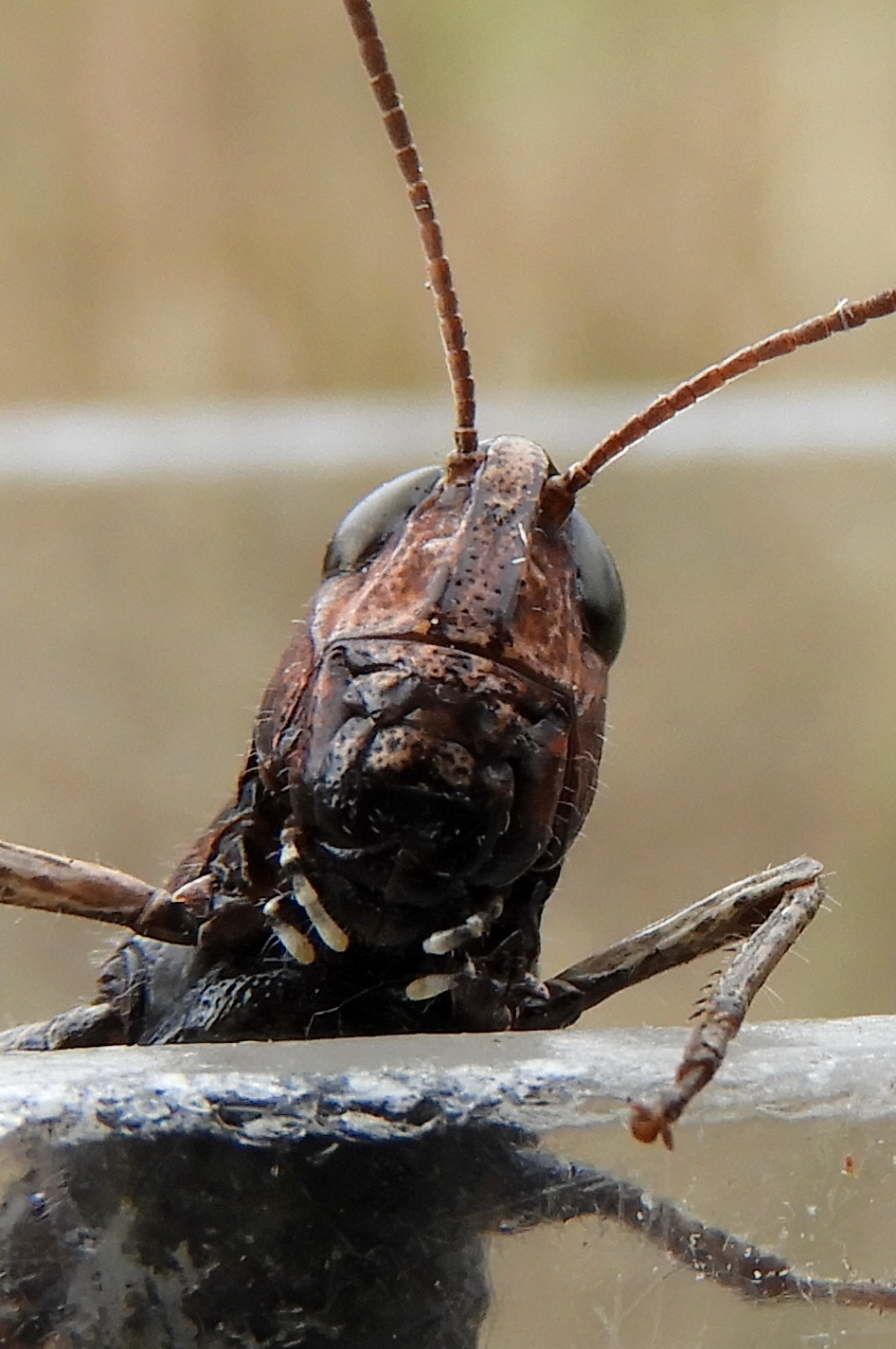
I just about managed to catch this shot of a woodland grasshopper (Omocestus rufipes) on Sutton Heath. This is an uncommon species, found largely in the southern counties of England where they may inhabitat woodland rides and clearings and heathland areas in the vicinity of woodland. While they can be tricky to separate from other grasshoppers, a decent view of the ‘face’ shows the distinctive white palps, as can be clearly seen in this Dorset specimen I encountered a few years back...
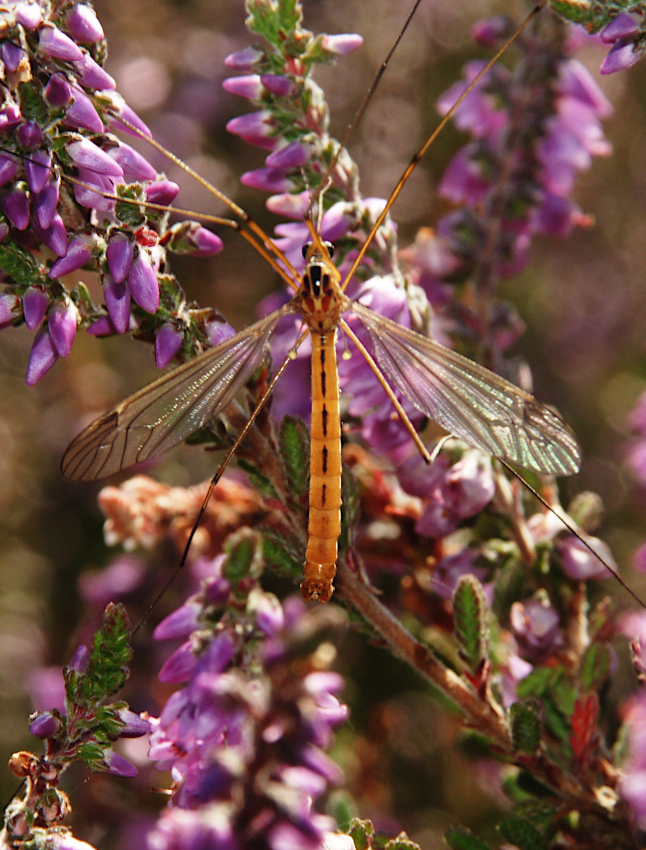
Nephrotoma scurra is one of the so-called tiger craneflies, a reference to the markings on the thorax. The Nephrotoma genus includes some common insects, such as N. quadrifaria and N. appendiculata (the spotted cranefly). This species is scarcer, with a distinct preference for heathland habitats.
The red longhorn beetle (Stictoleptura rubra) is another uncommon species, whose larvae develop in dead wood, often preferring to inhabit conifer woods. This one was inhabiting the heathy fringes of Rendlesham Forest and had the good manners to alight on my leg for a convenient, if unusual photo opportunity.
A summer holiday (I work in a school) travelling about a bit, but not posting anything for quite a few weeks. I shall endeavour catch up with myself.
When planning our holiday I have often been given to seek out something different; some new species perhaps, a bird associated with a certain area, or a special landscape. It is an enjoyable way to choose new places to visit and to persue what is really a lot more than hobby, but much more a life’s passion. The idea this summer however, when travelling around the UK in our camper was to go ‘nowhere in particular’ to see ‘nothing in particular’; to simply ‘just be’ wherever we found ourselves.
Emperor Dragonfly (Anax imperator) – the largest of the UK’s Odonata.
Near the northern fringe of the Mendip Hills in Somerset, this was perfectly encapsulated by one of a pair of small waterbodies that few would have heard about beyond those local to it. We had traced a route on the Ordnance Survey Explorer map, with a view to taking in the seemingly unassuming patches of blue showing the Litton Reservoirs. It turned out to be a pleasant walk on a very hot day. We were pleased to have made the lower of the two lakes, with the open water adding another dimension to our walk along hedgerows and lanes and occacional riverside glimpses. Then we found our ‘nowhere in particular’.
Lower Litton Reservoir
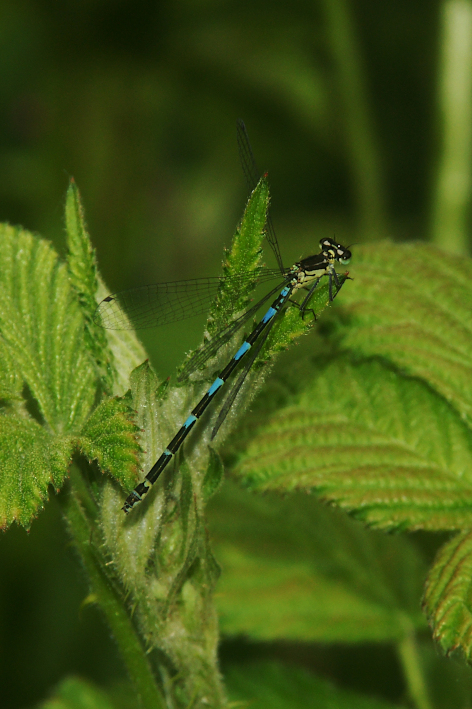
It was among the tree-clad banks that lined shallowing waters of the lake as it narrowed towards the damn that separates the comparatively broader sweep of the upper reservoir. The water was clear and weedy and positively teemed with life. Dragonflies thronged – stunning emperor dragonfly (Anax imperator), the imposing, rusty-winged brown hawker (Aeshna grandis) and the scarlet flash of male common darter (Sympetrum striolatum), all maurading the countless other barely visible flying creatures with wings flashing like burning sparks in the sunshine. Needle shards of gleaming blue threaded closer to the surface, damselfies confronting, conjoining, even crowding on the floating leaves of water plants, among them the variable damselfly (Coenagrion pulchelum), one of the more scarce blue and black species with which they rubbed shoulders here. All of this went presumably unheaded by the tufted duck (Aythya fuligula) and her brood of newly hatched, floating bundles of fluff, or the pair of little grebe (Tachybaptus ruficolis), evidently more focussed on the life that similarly teemed below. A long-dead and long-fallen branch seemed to offer the perfect perch for a watchful kingfisher (Alcedo atthis). Within 30 seconds of conveying this thought to my partner we got our fly-by of seering, sun-infused blue, the first of several and the picture was completed.
‘Nowhere in particular’ at Litton Reservoirs, Somerset.
The Litton Reservoirs will not, I suspect, be appearing in a ‘The Best Places to See Wildlife in the UK’ type of book any time soon, nor perhaps some tourist guide exotling the delights of the quintessential English countryside. Yet on this blazing July day, among the cool shade of the wooded banks and the heave of unrestrained life it was exactly the place to be. The pictures above I think do it litte justice; you may well be wondering what I’ve been rattling on about. But is was a classic case of ‘you had to be there’, or the notion of the ‘right place at the right time’. You may have, I hope, your own version of the same. We sat for a long while, unable to tear ourselves away.
Now nettles (Urtica dioica) are not everyone’s cup of tea. Neither is nettle tea for that matter, but this is to divert from the point. Rather, as a plant their presence is not necessarily a welcome one, not least for the fact that they can inflict a decicedly uncomfortable surprise to the unwary wanderer. Yet for those with an inclination towards a naturalist’s eye, their value is well known. Some of our most striking insects depend upon them as larval foodplants, with such stunning butterflies as the peacock (Aglais io), small tortoiseshell (Aglais urticae) and comma (Polygonia c-album) among them. There are, needless to say, many others that do likewise and it was the recent discovery of these peacock caterpillars that lead my thoughts to other, less obvious and overlooked creatures whose lives are inextricably linked to the nettle.
Liocoris tripustulatus is a small (about 5mm) and fairly distinctive mirid bug, strongly associated with nettles. They are active all year round and occur widely across the UK.
The nettle-tap (Anthophila fabriciana) is a day-flying micro-moth that never flies too far from the nearest nettle patch. Their appearance, with the conspicuous gap between the wings when at rest, is distinctive of the family.
The nettle weevil (Phyllobius pomaceus) is actually one of a group of very similar, hard to identify green-coloured weevils, although the foodplant allows one to make a initial fairly confident, eductated guess.
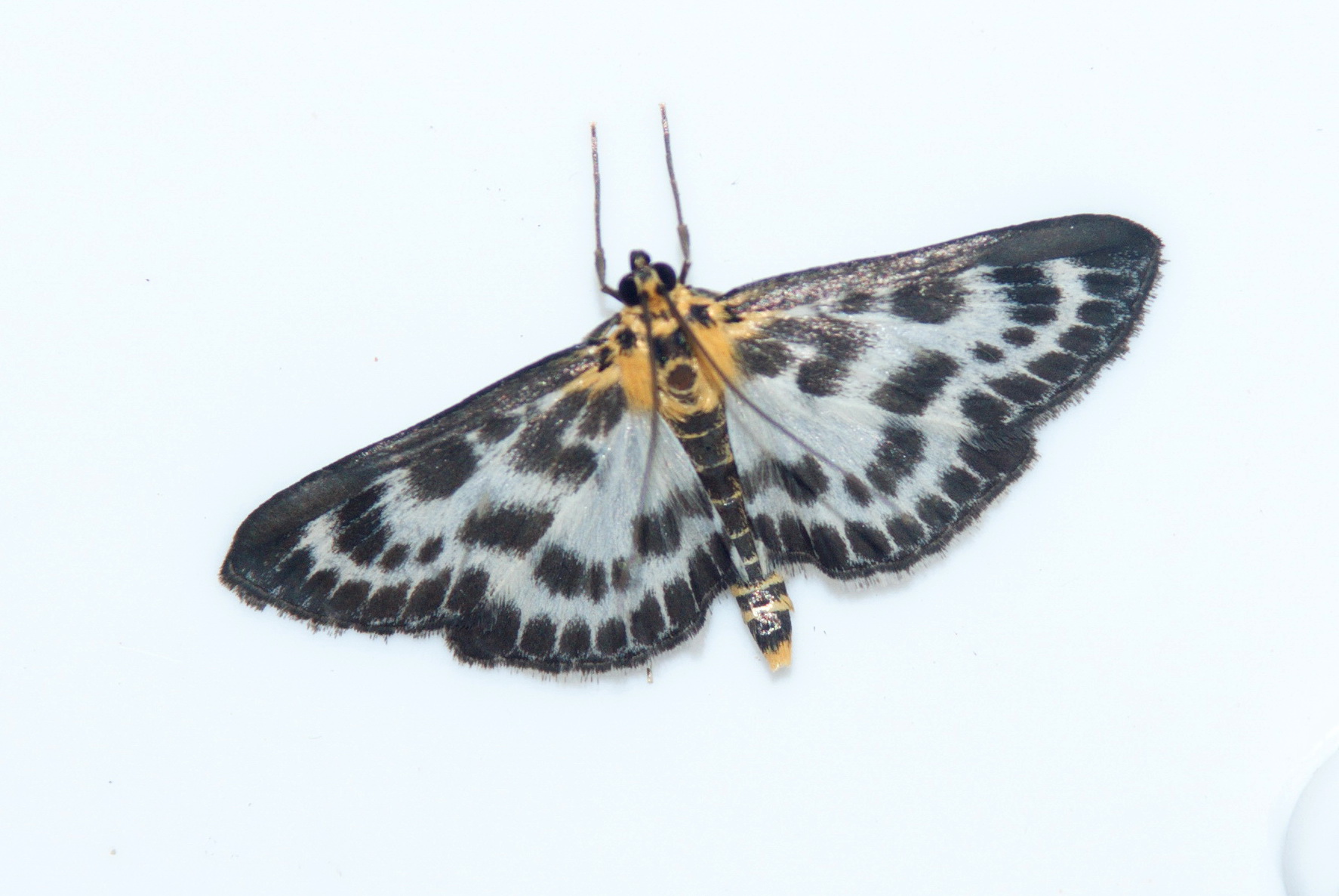
While a good deal more dimutive (with a wingspan of around 26mm) than those butterflies named above, the small magpie (Anania hortulata) is no less a striking insect. They are actually one the larger micro-moths (the micro- and macro- with moths is a distinction of convenience rather than of science), flying in June and July across much of the UK, particularly in England and Wales).
At times measuring 40mm from wing-tip to wing-tip, the mother of pearl (Pleuroptya ruralis) is one of the largest of the micro-moths. The vernacular comes from the irridescent gleam of the wings when caught in the light. A pale blur ghosting among the nettle stems as the summer dusk settles is very likely to be this species.
Invertebrates are probably not the most widely renowned for the investment of the parents in the well-being of their offspring. This is not, it seems reasonable to suggest, without good reason. That said, they will of course seek out what is deemed to be the best place location to deposit their eggs. A female dragonfly, for instance, may be drawn to a sufficiently weedy pond, while a hoverfly whose larvae attack aphids might seek out a likely looking plant on which to lay. But that is normally as far as parental responsibility in the invertebrate world often ends.
There are though, in the ever-intriguing world of nature, exceptions to what we may perceive as rules and perhaps more often than we might think. The chief inspiration here came from a recent encounter with the aptly named parent bug (Elasmucha grisea) in Thetford Forest. These shieldbugs are common over much of the UK, wherever birch is in adequate supply. On laying her eggs on a leaf the female will stand over them until they hatch, continuing her vigil until they grow to adulthood.
Parent Bug (Elasmucha grisea)
This got me to thinking about other parentally inclined insects and I recalled, a few years back, having idly rolled back a log whilst wandering through the woods, to finding an earwing (Forficula auricularia). It hadn’t scuttled away as most dark-dwelling creatures do when exposed to the light of day and I quickly discovered why. She (as it had now become obvious) was standing guard over her clutch of a few dozen, tiny eggs. She will dote over each of these little yellow pearls by licking them to keep them clean, for if she does not they might become contaminated with mould and fail to hatch.
Common Earwig (Forficula auricularia) guarding eggs.
A third, prominent example comes in the form of a spider, another creature found widely across the UK. The nursery-web spider (Pisaura mirabilis) is one of our larger, more noticebale species. They are hunting spiders and can often be seen resting on low vegetation, sensing for the movement of any potential prey to chase down and subdue. Like some other species (namely many of the wolf spiders) the female carries her clutch beneath her abdomen in a sperichal, white egg-sac. For her brood she constructs a tent-like web, often conspicuously bending over leaves in the process. Once the eggs hatch she then stands sentinel over her spiderlings on the surface of the nursery.
The likes of ‘cute’ and ‘attractive’ are not adjectives often coined for the such creatures as spiders, yet I will in this instance tentative make a case for such.
It is to one of the UK’s larger jumping spiders that we look. These are spiders that do not use webs to ensnare their prey, but instead sit still and watch out with their exceptionally acute vision for the movements of potential prey, leaping on them with speed and unerring accuracy. And when I mention “larger”, it is fair to say that the bar is not set especially high; the vast majority of our Salticidae measure in with a head and body length below 7 or 8mm. It is only the female of our spider that might exceed this, yet at a formidable 10mm (!) she still quite noticeable should it be encountered.
It is one Marpissa muscosa, or the Fencepost Jumping Spider, given the likelihood for it to be noticed by the casual human observer on fences or wooden gates. They are not common and I was very pleased to find and photograph this one on my home turf in South East Essex. Now ‘cute’ is not a word I personally find myself using very often when exploring the wonderful World of Little Things, but being a decidedly furry looking creature with two of its numerous shiny black eyes visible from above, it could, dare I suggest it, be said to have something a teddy bear quality to its apprearance.
I think they are attractively marked, with their chevrons and contrasting hues, but if not that then surely ‘striking’ could be accepted by those unconvinced. And whether anyone agrees that any spider could ever be described as cute, or indeed that any such frivilous term should ever be applied during the serious business Arachnology, the fact should remain that they are fabulous little creatures, well worthy of anyone’s time.
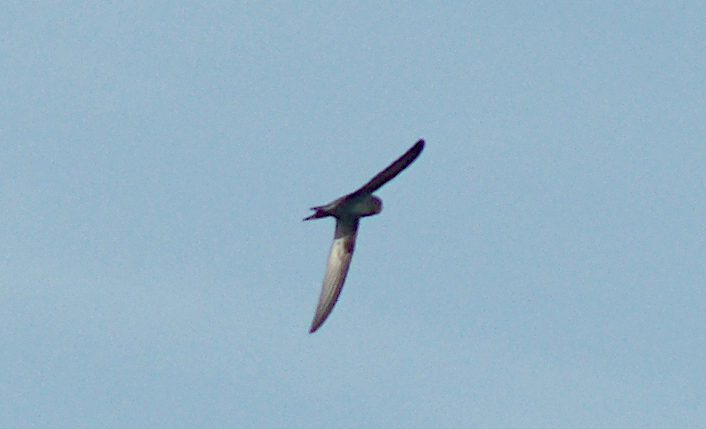
A title with two meanings. The one, indicates my return to posting on these pages after months of failing to do so. The other the keenly waited arrival of the swifts (Apus apus) above our house. Not that I am placing them both on the same level in terms of significance. The reappearance of those most aerial of birds is as momentous from each year to the next. My efforts on this blog are mere folly by comparison, but a folly that is hopefully enjoyed my some.
Of the birds, I once tried to capture them in verse.
Swifts Again Swift sears the faultless blue Between fair-weather clouds. Leaves me looking for vapour trails, But find no such platitudes Towards our own endeavours. Only the purity of wing And a healthy disregard For the drudgery of the soil.
Swift is a dream-bird. Shadows cutting bird shapes Into the waking memory; Eyes opening to unworldly sounds And empty cirrus-brushed sky. And then from the portal of the sun Materialises higher and circling madly On screaming spirals












 essex naturalist